
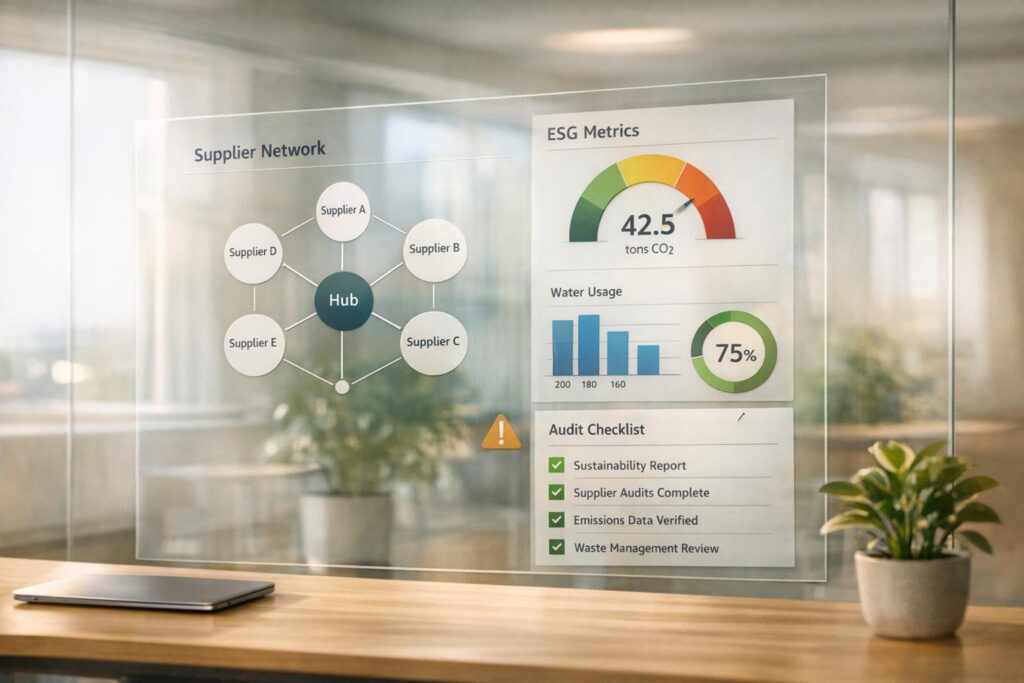
NetSuite helps businesses streamline supplier management by integrating data on compliance, certifications, and sustainability metrics into one unified business management suite. This system simplifies tracking and reporting, making it easier to meet regulatory requirements and customer expectations. Key features include:
- Centralized Supplier Records: Consolidates contracts, certifications, and transactions for quick access.
- Real-Time Dashboards: Tracks metrics like carbon emissions, energy use, and workforce diversity. For those in manufacturing, these insights are critical for optimizing complex supply chains.
- Vendor Scorecards: Compares supplier performance using actionable KPIs.
- Automated Reporting: Generates audit-ready reports for global standards like GRI and SASB.
- AI-Powered Risk Alerts: Identifies potential compliance or ESG risks in advance.
With these tools, companies can improve supplier collaboration, manage risks effectively, and align sustainability efforts with financial outcomes.
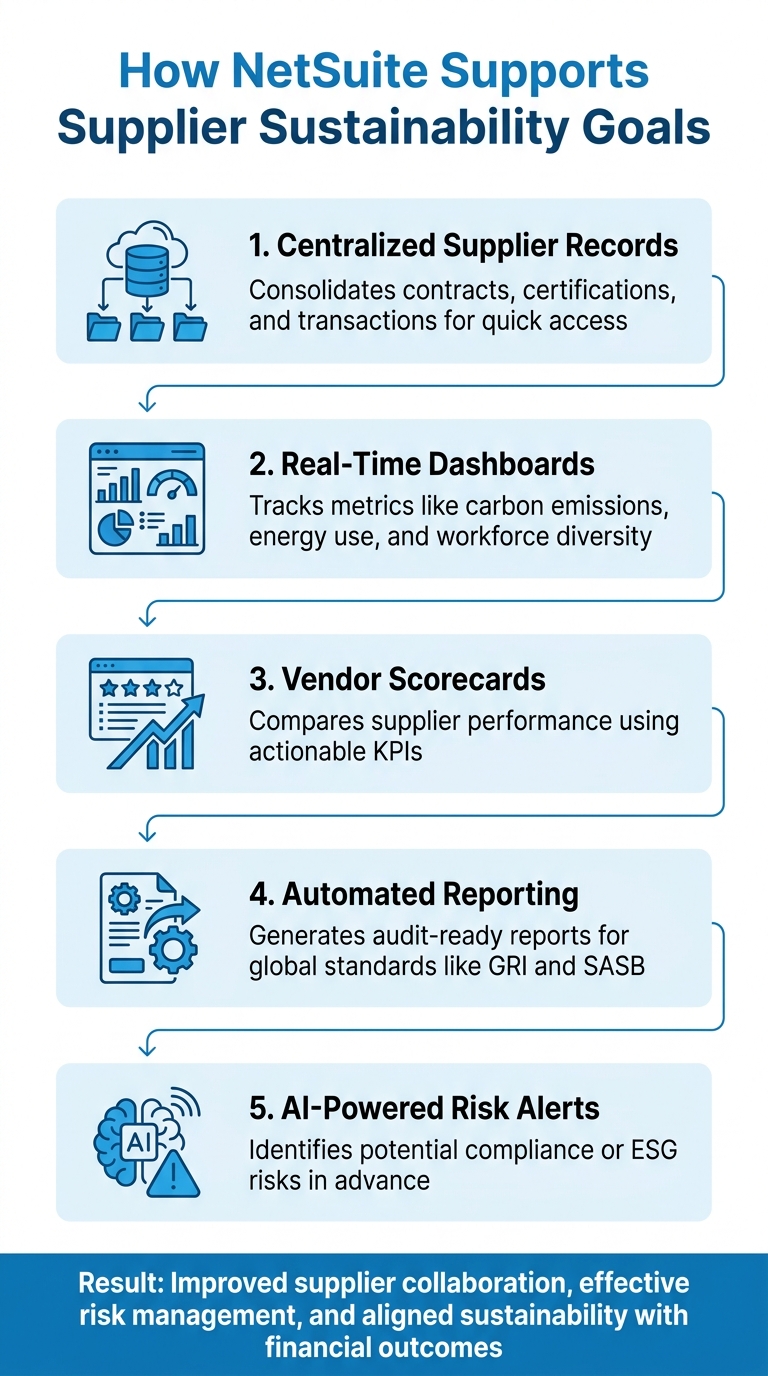
NetSuite’s 5 Key Features for Supplier Sustainability Management
Auditing Supplier Practices with NetSuite Vendor Records
Centralizing Supplier Data
NetSuite brings all supplier information – contracts, pricing, certifications, and transactions – into a single, easily accessible record. This eliminates the hassle of sorting through spreadsheets or email threads. Instead of juggling multiple systems to confirm if a supplier holds ISO certifications or complies with labor standards, procurement teams can quickly find everything they need within the vendor profile.
The Vendor Portal simplifies the process further. Suppliers can upload certifications, compliance documents, and audit results directly, and these are automatically linked to the relevant vendor record. For companies operating globally, NetSuite connects multiple subsidiaries under one record, providing a unified view of supplier performance across different regions and currencies.
"We use NetSuite for absolutely everything: for assisting sales teams and providing personalized quotes to customers, for driving materials requirements, communicating with suppliers, processing production orders and delivery notes."
- Jennifer Heitt, Financial Controller, Platinum Stairlifts
This centralized approach also lays the groundwork for tracking sustainability metrics with greater precision.
Evaluating Sustainability Metrics
Once supplier data is centralized, businesses can effectively assess environmental and ethical standards. NetSuite tracks key metrics like energy consumption, greenhouse gas emissions, water use, waste generation, and procurement practices. It also monitors social factors, including workforce diversity, safety incidents, and labor-related issues. Vendor scorecards transform these metrics into actionable KPIs, enabling procurement teams to compare suppliers and hold them accountable.
The audit trail feature (Transactions > Management > View Audit Trail) keeps a detailed record of every change made to vendor records, including who made the change and when. This transparency supports compliance with ESG reporting frameworks like GRI and SASB. Additionally, linking sustainability efforts to financial outcomes highlights cost savings from reduced energy use and waste. Considering that Scope 3 emissions often make up about 75% of a company’s total carbon footprint, this level of supplier visibility is essential for achieving climate goals.
sbb-itb-2560759
Setting and Tracking Sustainability Goals with NetSuite
Using Dashboards to Manage Goals
NetSuite dashboards offer a central hub for monitoring sustainability goals – whether that’s renewable energy usage, waste reduction, or supplier compliance – alongside financial and operational data.
These dashboards can be customized to suit different roles within a company. For example, leadership teams might focus on overarching metrics like total Scope 3 emissions or progress toward recycled content goals. Meanwhile, procurement teams can zero in on supplier-specific data, such as certification statuses or labor compliance.
"When sustainability is built in, rather than bolted on, companies can respond to new requirements through a NetSuite implementation without struggling to pull data from disparate sources." – Rami Ali, Senior Product Marketing Manager, NetSuite
Defining KPIs for Sustainable Supply Chains
Dashboard insights enable businesses to establish measurable KPIs, turning broad sustainability promises into actionable objectives. NetSuite facilitates tracking across environmental, social, and governance areas.
- Environmental KPIs: Examples include greenhouse gas emissions per supplier, water usage, and recycled material integration.
- Social KPIs: These might track workforce diversity or safety incident rates.
- Governance KPIs: Common metrics include compliance rates, audit outcomes, and completion of ethics training.
Improving Supply Chain Visibility with NetSuite Modules
Real-Time Supplier Performance Monitoring
NetSuite professional services help implement modules that provide live insights into how suppliers contribute to sustainability goals by integrating data from finance, supply chain, inventory, and procurement systems. This integration allows for seamless ESG tracking across various metrics.
With real-time dashboards, businesses can continuously monitor key sustainability indicators such as carbon footprints, energy use, and workforce diversity. These metrics adjust dynamically based on actual supplier transactions and activities. While leadership teams gain an overview of broader trends, procurement teams can dive into supplier-specific details, like certifications and compliance statuses, all within one platform – no need to juggle multiple systems.
The platform also supports tier mapping that goes beyond immediate suppliers. By 2026, 17.1% of organizations are expected to analyze their suppliers down to Tier 4 – a big leap from just 3.7% in 2023. This deeper mapping helps companies uncover risks in their extended supply chains, such as labor violations or environmental concerns several tiers removed from direct relationships. With this level of visibility, businesses can take proactive steps to manage potential risks effectively.
Mitigating ESG Risks
NetSuite’s tools go beyond visibility to help businesses address environmental, social, and governance (ESG) risks before they escalate. The system tracks supplier certifications, monitors geographic regulatory compliance, and flags potential labor-related issues.
Powered by AI, NetSuite continuously audits compliance requirements and alerts users to potential risks in real time. This is especially helpful as new regulations, like California’s climate disclosure rules and the EU’s Ecodesign for Sustainable Products Regulation, demand greater supply chain transparency. Businesses can link certifications and compliance data directly to specific products and vendor records. For example, sustainability data, such as the percentage of recycled content in a product, can be tied to specific SKUs, ensuring complete traceability. By connecting these details to supplier records, NetSuite strengthens a company’s ability to meet its sustainability commitments.
"A solid supplier relationship is not necessarily one that is without conflict or trouble; what makes these partnerships work is the parties’ willingness to collaborate, whether times are good or bad." – NetSuite
Using Analytics for Continuous Improvement
Analyzing ESG Metrics and Supplier Scores
NetSuite takes ESG tracking to the next level by seamlessly integrating it with financial and operational data, so there’s no need to juggle multiple systems. Its sustainability dashboards offer a comprehensive view of key metrics like carbon footprints, energy use, material waste, and workforce diversity. These dashboards are tailored for leadership and compliance teams, ensuring everyone has the insights they need. For organizations needing help configuring these views, NetSuite support services can ensure dashboards are optimized for specific reporting requirements.
One standout feature is the ability to connect ESG data directly to financial performance. For example, you can forecast how initiatives like adopting eco-friendly packaging or investing in green infrastructure might influence revenue and ROI. A real-world example? Companies actively addressing supply chain emissions have collectively saved $13.6 billion. NetSuite also pinpoints "emissions hotspots" by linking procurement, inventory, and logistics data through NetSuite integrations – vital since supply chain emissions are, on average, 26 times higher than those from direct operations.
This level of integration doesn’t just provide data; it enables actionable, informed decision-making.
Predictive Insights for Adjustments
NetSuite’s AI-driven analytics go a step further by predicting potential challenges. It can flag suppliers or materials that may struggle to meet new environmental or labor standards, giving businesses the chance to act ahead of time.
Additionally, the platform ensures compliance and audit readiness with frameworks like GRI, SASB, and CSRD, thanks to detailed data trails. This is particularly critical given that only 15% of companies reporting sustainability data have established specific Scope 3 (supply chain) emission targets. NetSuite equips businesses to not only meet these challenges but to stay ahead of them.
Improving Supplier Collaboration for Sustainability
Building Accountability Through Shared Data
Centralized, collaborative data plays a crucial role in improving supplier sustainability assessments. NetSuite provides a single source of truth that connects finance, supply chain, and procurement functions seamlessly. This eliminates inconsistencies in data and ensures that both your business and suppliers have access to the same sustainability information.
By integrating sustainability certifications and compliance details directly into product and vendor records, the system closes the gap between R&D and operational teams. This setup allows you to monitor certifications, audits, and test results at the ingredient or lot level. So, when a supplier claims compliance with environmental or labor standards, the documentation is readily available within the system. This shared data framework supports automated and precise reporting on sustainable practices.
"Strong programs don’t treat environmental claims, supplier audits, and packaging decisions as discrete processes handled by different teams. They link product design, sourcing, manufacturing, and distribution to shared data and accountability." – Rami Ali, Senior Product Marketing Manager, NetSuite
Automating Reporting for Sustainable Practices
Once shared data is established, automation takes sustainability reporting to the next level. Manual reporting can be tedious and prone to mistakes, but NetSuite simplifies this by automating data collection from daily operations, significantly reducing errors and administrative workload. This is especially important for Scope 3 emissions, which often account for 26 times more than direct operational emissions.
NetSuite generates audit-ready reports that align with global standards like GRI, SASB, and CSRD, ensuring clear and reliable audit trails. Additionally, with SuiteTalk APIs, the platform supports automated data exchange with third-party supplier systems, enabling smooth communication. Real-time dashboards further enhance visibility, allowing businesses to monitor supplier performance against sustainability KPIs effectively.
This level of integration is increasingly critical as major retailers such as Walmart and Target now require suppliers to report specific emissions data and recycled content percentages by SKU. NetSuite’s automated reporting tools not only help suppliers meet these demands but also reduce the administrative burden of compliance, making the process more efficient and manageable.
Conclusion
NetSuite takes supplier sustainability beyond just a reporting requirement by embedding ESG metrics directly into its ERP system. Instead of treating sustainability as a separate initiative, the platform integrates procurement, inventory, finance, and supply chain data. This approach allows businesses to address retailer demands, regulatory audits, and investor inquiries without the hassle of pulling together scattered data sources.
Investing in supply chain sustainability does more than meet compliance standards – it delivers measurable benefits. For instance, the potential value tied to these efforts is estimated at nearly $165 billion, far outweighing the investments required. With 85% of companies viewing sustainability as a way to create value rather than a cost, NetSuite’s tools and productivity-boosting apps help businesses turn environmental responsibility into tangible results.
"When sustainability is built in, rather than bolted on, companies can respond to new requirements without struggling to pull data from disparate sources."
- Rami Ali, Senior Product Marketing Manager, NetSuite
Through real-time dashboards and AI-driven analytics, NetSuite equips businesses to meet their sustainability goals efficiently. These tools transform insights into immediate action, ensuring that commitments are met without delay.
FAQs
What supplier data do I need to track sustainability in NetSuite?
To keep tabs on sustainability within NetSuite, focus on tracking essential supplier data. This includes metrics like emissions, percentages of recycled content per SKU, third-party ingredient certifications, energy usage, and material waste. Monitoring these details allows for a better evaluation and management of supplier sustainability efforts.
How can NetSuite help measure and report Scope 3 emissions from suppliers?
NetSuite helps businesses measure and report Scope 3 emissions by bringing together supply chain data in one place. It monitors emissions tied to logistics, transportation, and raw materials, making it easier to generate precise ESG reports. This allows companies to align their operations with their sustainability goals more seamlessly.
How do I use vendor scorecards to enforce supplier sustainability goals?
Using vendor scorecards in NetSuite ERP is a smart way to monitor supplier performance across important metrics like defect rates, on-time deliveries, costs, and even environmental factors. By keeping these scorecards updated and reviewing them regularly, you can ensure suppliers are meeting your ESG (Environmental, Social, and Governance) standards. This includes tracking data like emissions, recycled materials, and relevant certifications. Not only does this help pinpoint suppliers who fall short, but it also nudges them toward aligning with your sustainability goals.
