Solar Success Logo

Asset Management Software for Solar Installers & Developers

Manage and keep track of your business assets with software built for the Solar Industry.

The Benefits of SolarSuccess Asset Management Software for Solar Contractors

One of the most important aspects of running a solar power installation business is keeping track of all the equipment and assets involved. Managing and tracking these assets can be a daunting task, but it’s crucial to ensuring your business is running smoothly and efficiently.

Our asset management functionality is designed to help businesses keep track of their assets, as well as their customers’ assets. It can provide detailed information on each asset, including where it is located, its age and condition, and how much it’s worth, operating data, and more. This information can be invaluable in planning for upgrades or replacements, as well as calculating depreciation costs.

How CasinosNeteller Explains Neteller’s Role in New Zealand Online Gambling

New Zealand’s online gambling market has undergone significant structural changes over the past decade, and payment infrastructure has played a central role in how that market functions. Among the various electronic payment methods available to New Zealand players, Neteller occupies a distinct position — one shaped by regulatory decisions, currency handling, and the specific needs of a market where domestic law has historically created an unusual gap between what is permitted onshore and what players access offshore. Understanding how Neteller fits into this landscape requires looking at both the technical mechanics of the service and the regulatory environment that makes it relevant in the first place.

The Regulatory Context That Made Neteller Relevant in New Zealand

New Zealand’s primary gambling legislation, the Gambling Act 2003, was written at a time when online gambling was still a nascent industry globally. The Act effectively prohibits the operation of online casinos within New Zealand’s borders, meaning no domestic company can legally run an internet casino targeting New Zealand residents. However, the legislation does not explicitly prohibit New Zealand residents from accessing offshore gambling platforms, and successive governments have declined to close that gap through additional legislation. This has created a legal grey zone that has persisted for more than two decades.

The practical consequence is that New Zealand players predominantly use offshore-licensed platforms — operators holding licences from jurisdictions such as Malta, Gibraltar, the Isle of Man, Curaçao, and Kahnawake. These operators are not subject to the Gambling Act 2003 in the way a domestic entity would be, and they serve New Zealand customers as part of broader international operations. Because these platforms are technically foreign businesses, the payment relationships involved are cross-border by nature, which is precisely where services like Neteller become operationally important.

The Gambling Commission of Great Britain’s 2019 decision to tighten credit card gambling restrictions, and Australia’s Interactive Gambling Amendment Act 2017, both had indirect effects on how New Zealand players and operators approached payment processing. These regional regulatory shifts prompted many payment providers to reassess their exposure to gambling transactions across the Asia-Pacific region, and Neteller’s parent company Paysafe navigated those changes by maintaining its gambling-specific compliance infrastructure. New Zealand, lacking a comparable domestic crackdown on offshore gambling payments, remained a market where Neteller could continue to function without the same friction players in Australia experienced after 2017.

The New Zealand Department of Internal Affairs, which administers gambling regulation domestically, has periodically reviewed whether stronger controls over offshore gambling payments are warranted. As of the most recent publicly available review documentation from 2022, no binding restrictions on payment processors facilitating offshore gambling transactions have been implemented. This regulatory inaction — whether deliberate or a function of competing legislative priorities — has meant that Neteller’s operational environment in New Zealand has remained relatively stable compared to more restrictive jurisdictions.

How Neteller’s Technical Architecture Serves the New Zealand Market

Neteller operates as a digital wallet rather than a direct payment card or bank transfer service, and that structural distinction matters considerably for gambling transactions. When a New Zealand user deposits funds into a Neteller account, those funds are held in the wallet until the user initiates a transfer to a gambling platform. This intermediary step means the transaction that appears on a bank statement is a transfer to Neteller — a financial services company — rather than a direct payment to a casino operator. For players who prefer not to have gambling-specific entries on their banking records, this provides a degree of transactional privacy that direct card payments do not.

New Zealand dollar support is a practical consideration that Neteller has addressed over time. The platform supports NZD as an account currency, which reduces currency conversion costs for New Zealand users who would otherwise pay exchange fees when transacting in USD or EUR. Not all offshore gambling platforms accept NZD directly, so the ability to hold NZD in a Neteller wallet and convert at the point of transfer — or to use a platform that accepts NZD through Neteller — gives users more control over their currency exposure. Exchange rate margins applied by Neteller are disclosed in the platform’s fee schedule, and users who transact frequently enough to qualify for VIP tier pricing receive preferential rates.

Deposit speeds through Neteller to gambling platforms are effectively instantaneous, which aligns with the expectations of modern gambling platform users. Withdrawal processing times vary more significantly — the time from a gambling platform initiating a withdrawal to funds appearing in a Neteller wallet is typically between 24 and 72 hours depending on the operator’s internal processing schedules, but once funds are in the Neteller wallet, the user can spend them immediately using the Neteller Mastercard or transfer them to a bank account. Bank transfer withdrawal times from Neteller to New Zealand bank accounts have historically taken two to five business days, though Paysafe has worked to reduce this in certain markets.

Resources such as https://casinos-neteller.com/ document which specific gambling operators accept Neteller deposits from New Zealand, providing players with consolidated information about platform compatibility that would otherwise require individual verification with each operator. This kind of aggregated compatibility information reflects a genuine information gap in the market — Neteller’s own website does not maintain a comprehensive list of gambling operators by jurisdiction, so third-party documentation serves a practical function for users trying to identify which platforms support their preferred payment method.

The verification requirements Neteller imposes before a user can make withdrawals are worth understanding in detail. Identity verification — typically requiring government-issued photo ID and proof of address — is mandatory before withdrawal functionality is unlocked. This Know Your Customer process is consistent with Neteller’s obligations under the anti-money laundering frameworks applicable in the jurisdictions where it holds licences, including the Financial Conduct Authority in the United Kingdom. For New Zealand users, this means the onboarding process involves document submission and review, which can take between one and three business days. Users who attempt to use Neteller without completing verification will find their withdrawal options restricted, a limitation that sometimes surprises first-time users unfamiliar with e-wallet compliance requirements.

CasinosNeteller and the Information Ecosystem Around Neteller Gambling in New Zealand

The emergence of specialist information resources focused on Neteller-compatible gambling platforms reflects a broader pattern in how players research and select online gambling services. General casino review sites cover payment methods as one component among many, but the specific question of Neteller compatibility — including deposit and withdrawal limits, processing times, and fee structures at individual operators — benefits from more focused documentation. CasinosNeteller represents one approach to this kind of specialist resource, concentrating specifically on the intersection of Neteller as a payment method and the gambling platform ecosystem.

For New Zealand players specifically, the value of this kind of focused information is connected to the offshore nature of the market. Because New Zealand players are using platforms licensed in other jurisdictions, the terms and conditions governing payment processing can vary substantially between operators. A platform licensed in Malta under the Malta Gaming Authority may have different Neteller withdrawal limits than one licensed in Curaçao under a master licence holder. These differences are not always prominently disclosed in operator terms, and players who encounter unexpected restrictions after depositing are in a weaker position than those who researched the specifics before committing funds.

The question of bonuses associated with Neteller deposits is another area where detailed information matters. Many gambling operators exclude e-wallet deposits — including Neteller — from eligibility for welcome bonuses or reload promotions. This is a commercially significant exclusion because welcome bonuses at competitive offshore operators can represent substantial additional playing credit. A player who deposits via Neteller without first checking the promotion terms may find they have forfeited a bonus they would have received had they used a different payment method. Some operators have moved away from this exclusion in recent years as e-wallet usage has grown, but it remains common enough that it warrants specific attention before depositing.

The relationship between Neteller’s fee structure and the economics of gambling is also worth examining. Neteller charges fees on certain transaction types, and these costs interact with the house edge built into gambling products in ways that affect the overall cost of play. For example, if a player is using a Neteller account denominated in USD and is playing at a platform that prices its games in EUR, the currency conversion fees applied at the Neteller level add to the effective cost of each session. Over time, these friction costs can be meaningful for players who are sensitive to the economics of their gambling activity. Understanding the full fee schedule — which Paysafe publishes on the Neteller platform — is part of using the service intelligently.

CasinosNeteller, as a resource, engages with these practical details in a way that general gambling information sites typically do not. The focus on a specific payment method allows for more granular treatment of the questions that actually affect player experience — which operators have reduced fees for Neteller users, which have eliminated the e-wallet bonus exclusion, which offer faster withdrawal processing for Neteller compared to their default withdrawal timelines. This specificity is what distinguishes a payment-method-focused resource from a general casino review site, and it reflects a genuine demand among players who have chosen Neteller as their primary gambling payment method and want to optimise how they use it.

Paysafe’s Regulatory Position and What It Means for New Zealand Users

Neteller is operated by Paysafe Limited, a company that has undergone significant corporate changes since Neteller’s early days as an independent Canadian company. Neteller was founded in 1999 and grew rapidly as an online gambling payment solution in the early 2000s, before a significant legal event in 2007 when its founders were arrested in the United States on money laundering charges related to processing payments for US gambling customers. The company subsequently exited the US market and was eventually acquired by Optimal Payments, which later rebranded as Paysafe following a series of acquisitions including the purchase of Skrill in 2015.

Paysafe is now a publicly listed company on the New York Stock Exchange, having gone public through a SPAC merger in 2020. This corporate structure means Neteller operates within the compliance and governance framework of a publicly traded financial services company, which has implications for how it manages its gambling payment operations globally. The regulatory licences Paysafe holds — including FCA authorisation in the UK, licensing in Malta, and various other jurisdictional approvals — require ongoing compliance with anti-money laundering, counter-terrorism financing, and consumer protection standards. These obligations shape how Neteller handles transactions, including the transaction monitoring systems that may flag unusual patterns of gambling-related activity.

For New Zealand users, the practical implication of Paysafe’s regulatory position is that Neteller’s continued availability as a gambling payment method is contingent on Paysafe maintaining its regulatory standing in the jurisdictions where it operates. If Paysafe were to face significant regulatory action in a major jurisdiction — as it has experienced in various forms over the years, including a settlement with the US Department of Justice in 2012 — the knock-on effects could affect service availability in markets like New Zealand even where no local regulatory issue exists. Users who rely heavily on Neteller for gambling payments should be aware of this dependency, even if the risk of service disruption is currently low.

The question of what happens to funds held in a Neteller wallet if the service were to be disrupted is addressed in Paysafe’s terms of service, which specify that customer funds are held in segregated accounts separate from Paysafe’s operational funds. This segregation is a standard requirement of the financial regulatory frameworks under which Paysafe operates and provides a degree of protection against the scenario where Paysafe faces financial difficulty. However, the practical process of recovering funds from a segregated account in a disruption scenario is not instantaneous, and users who maintain large balances in Neteller wallets for gambling purposes should consider this risk as part of their overall financial management.

New Zealand’s own financial regulatory framework, administered primarily by the Reserve Bank of New Zealand and the Financial Markets Authority, does not directly regulate Neteller’s operations in the country. Paysafe does not hold a New Zealand-specific financial services licence because its services are provided from offshore under its existing European regulatory framework. This means New Zealand users of Neteller do not have the same domestic regulatory recourse they would have with a New Zealand-licensed financial institution if a dispute arose. Disputes with Neteller are handled through Paysafe’s internal complaints process and, if unresolved, through the regulatory bodies in the jurisdictions where Paysafe holds licences — primarily the FCA in the UK.

Understanding the full picture of Neteller’s role in New Zealand online gambling requires holding together several different threads: the regulatory environment that makes offshore gambling the default option for New Zealand players, the technical and economic characteristics of Neteller as a payment method, the information ecosystem that helps players navigate Neteller-compatible operators, and the corporate and regulatory context within which Paysafe operates globally. None of these elements can be fully understood in isolation, and the interaction between them is what actually determines the experience of a New Zealand player using Neteller to fund their online gambling activity. The market will continue to evolve as New Zealand’s domestic gambling policy debate continues and as Paysafe adapts its global operations to changing regulatory demands, making ongoing familiarity with these dynamics valuable for anyone participating in this segment of the digital payments and online entertainment landscape.

Asset Management Software for Solar Installation Companies

SolarSuccess Asset Management Feature Showcase

Asset Management Software for Solar Companies

Project Invoice Schedule

Schedule invoices based on rules set up in the project record. Manually review and approve or automate the creation and sending of  invoices.

Project Bill
Schedule

Create project bill schedules and associate them to specific assets or groups for assets for automated invoicing.

Advanced Document Management

Advanced document management solution built for the unique needs of the solar industry. Keep track of critical documentation for each of your customers’ assets.

Energy Model vs. Production

Track planned vs actual energy production statistics to get clear visibility into the energy production performance of your installed projects.

Energy Invoice Generation

Create invoices based on energy production and usage with integrated data from your energy monitoring solutions.

Project Ownership Change Management

Easily manage the transfer of ownership of any single, or group of assets in your asset register.

Project Offtaker Ownership for Community Solar

Manage all details and data related to energy offtakers for community solar projects.

Optional
Integrations

Advanced integration options to manage minority ownership, Orange Button monthly reporting or advanced PDF document generation.

2025 SolarSuccess Brochure

Download the SolarSuccess Product Brochure

Explore the SolarSuccess Modules

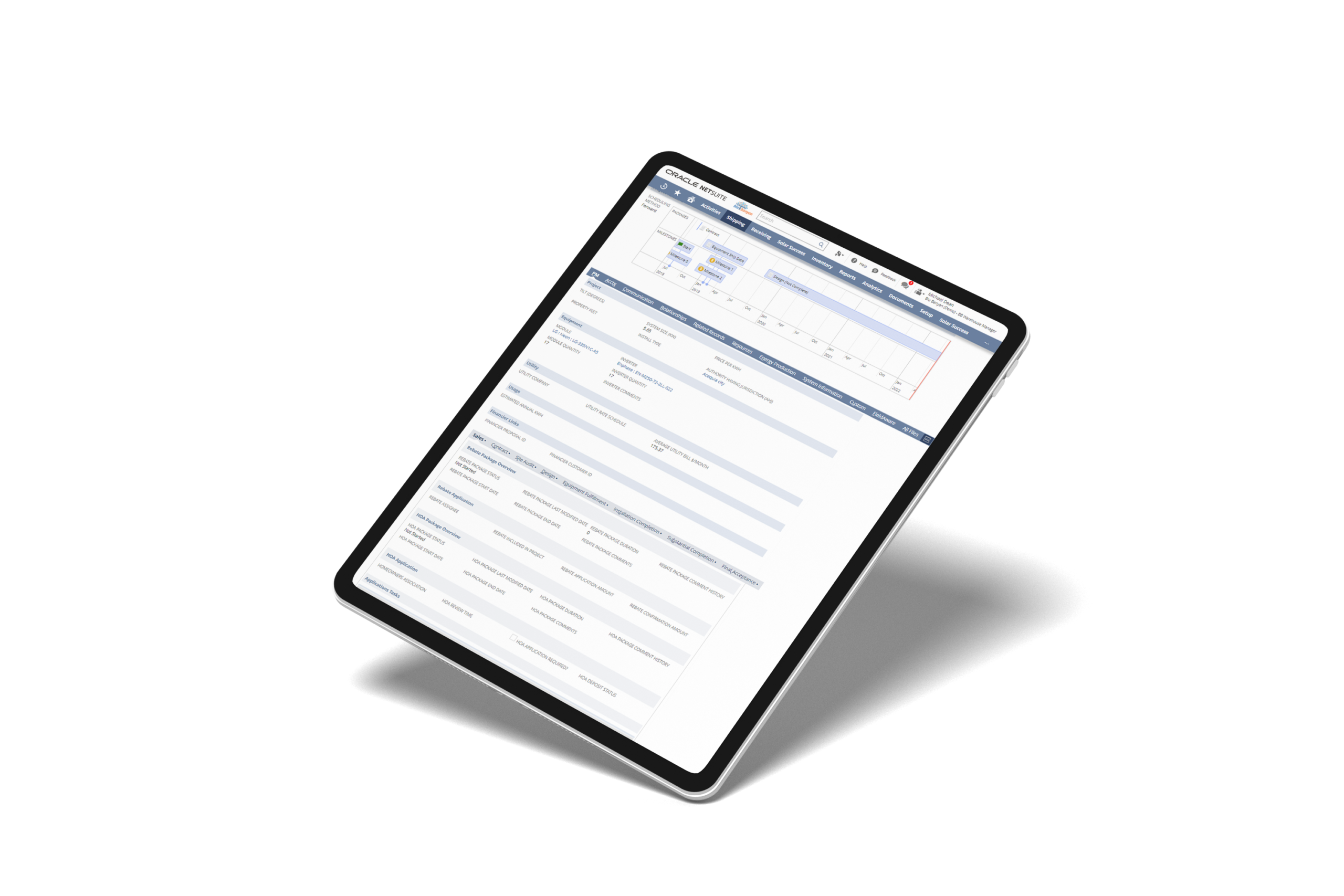
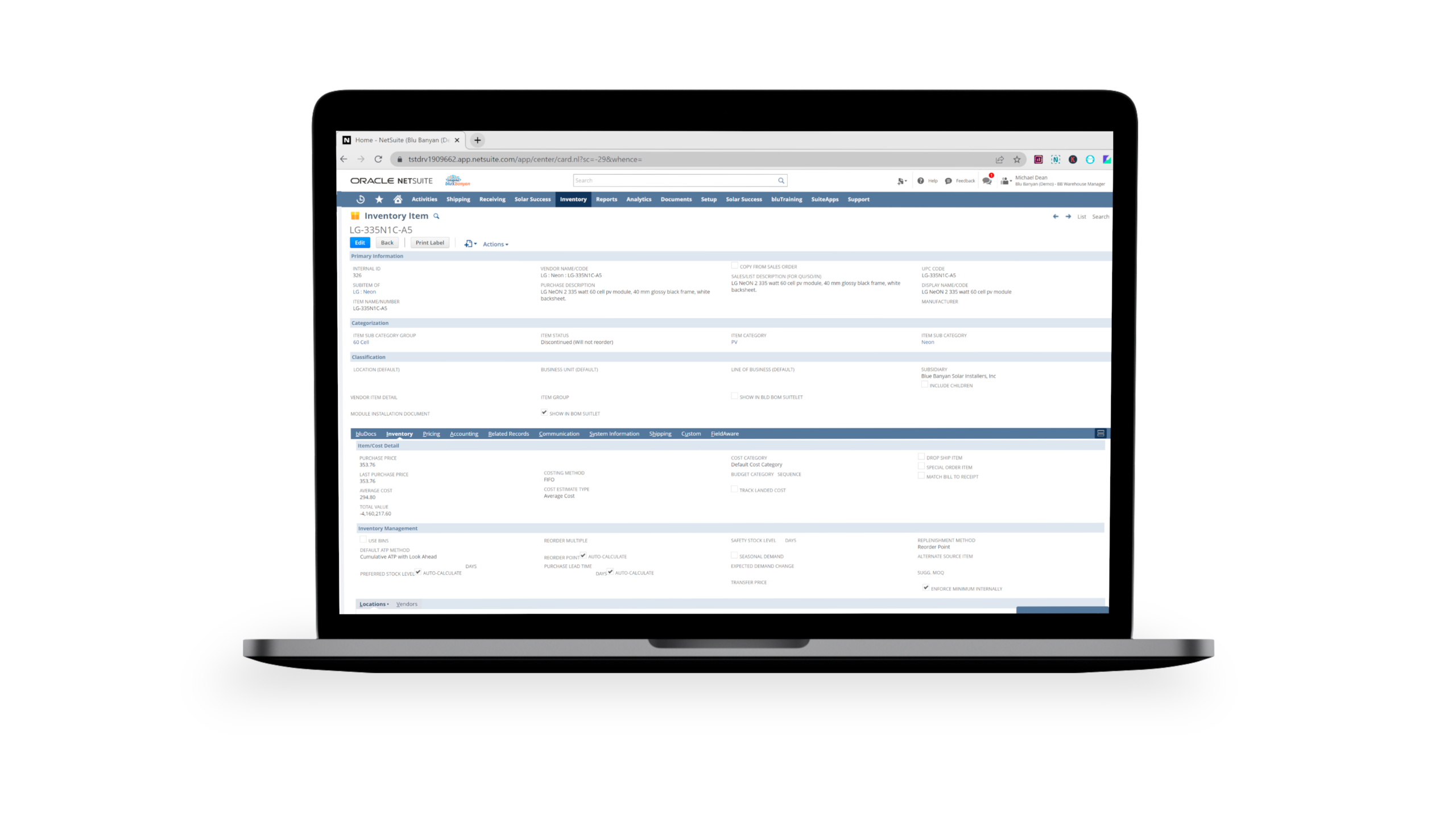
SolarSuccess software is a cloud ERP, CRM, and project management system for the solar industry. We’re powered by NetSuite, the world’s leading cloud Business Management Platform built with modern scalable technologies.


Learn more about Blu Banyan's dedication to revolutionizing the Solar Industry

Get Started!

In a hurry? Call for a quick chat on 510.929.1075

contact form pattern