

Inspection rejections are more than just a hassle—they delay project timelines, increase costs unexpectedly, and strain your resources.
So what’s really causing those inspection rejections?
Without clear insights, common installation errors like improper labeling or deviations from permitted plans can go unnoticed, leading to frequent rejections and project delays.
That’s where SolarSuccess comes in. Our AHJ Inspection Rejection Rate pivot table lets you dig into rejection trends from multiple angles, helping you uncover patterns and identify common factors behind inspection rejections.
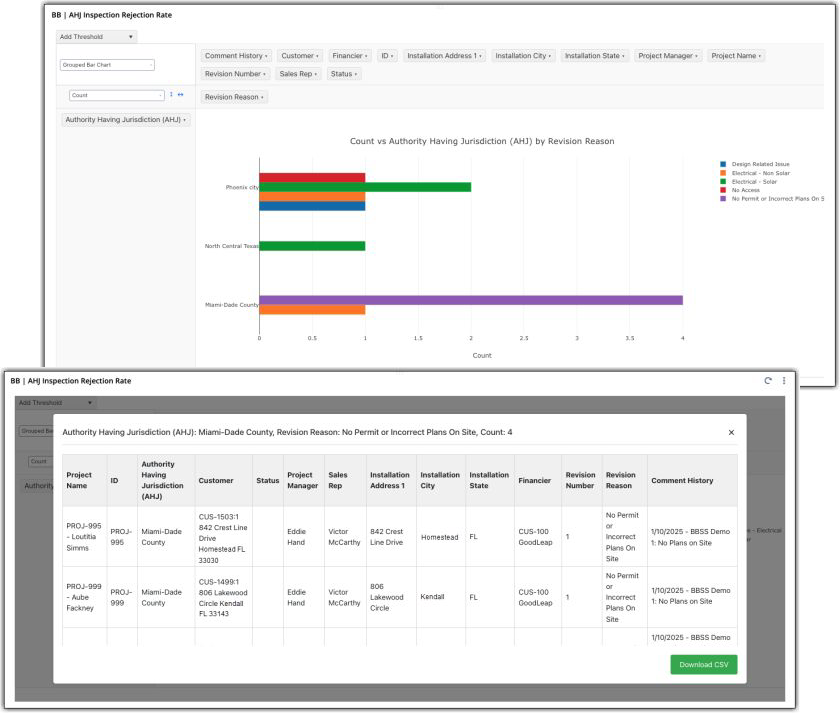
With a clear view of patterns, you can take proactive steps to address known issues before they can cause problems during inspection—and before they get a chance to delay your projects.
These are just a few of the insights you may uncover:
👉 An AHJ frequently rejects your projects for the same reason. Do your project checklists cover all the required standards for that AHJ?
👉 Certain system sizes or types are more prone to rejections. Where can your installation practices be refined for those installations?
👉 Specific states experience higher rejection rates. How can you adjust your processes to meet regional requirements?
👉 Certain rejection reasons occur more frequently. Which recurring issues can be addressed more consistently in the earlier project stages?
Getting control of inspection rejections is easier than you think.
With SolarSuccess, you can build smarter, pass inspections reliably, and deliver projects on schedule. Reach out to learn more about how we can help you improve your rejection rate.
