

When planning an ERP implementation, assessing your organization’s readiness is critical to avoid risks, delays, and budget overruns. A change readiness assessment evaluates preparedness across people, processes, and infrastructure, helping you identify gaps and challenges before starting the project. Here’s a quick summary of the process:
- Define ERP goals and scope: Identify inefficiencies, set measurable objectives, and determine project boundaries to avoid scope creep.
- Use McKinsey 7-S Framework: Analyze organizational elements like strategy, structure, systems, staff, and skills to uncover weak areas.
- Evaluate digital maturity: Map workflows, audit current systems, and identify gaps in technology and processes.
- Assess leadership and employee readiness: Ensure leadership alignment, measure employee skills, and address resistance with targeted training.
- Create action plans: Use findings to close gaps, allocate resources, and establish a roadmap for success.
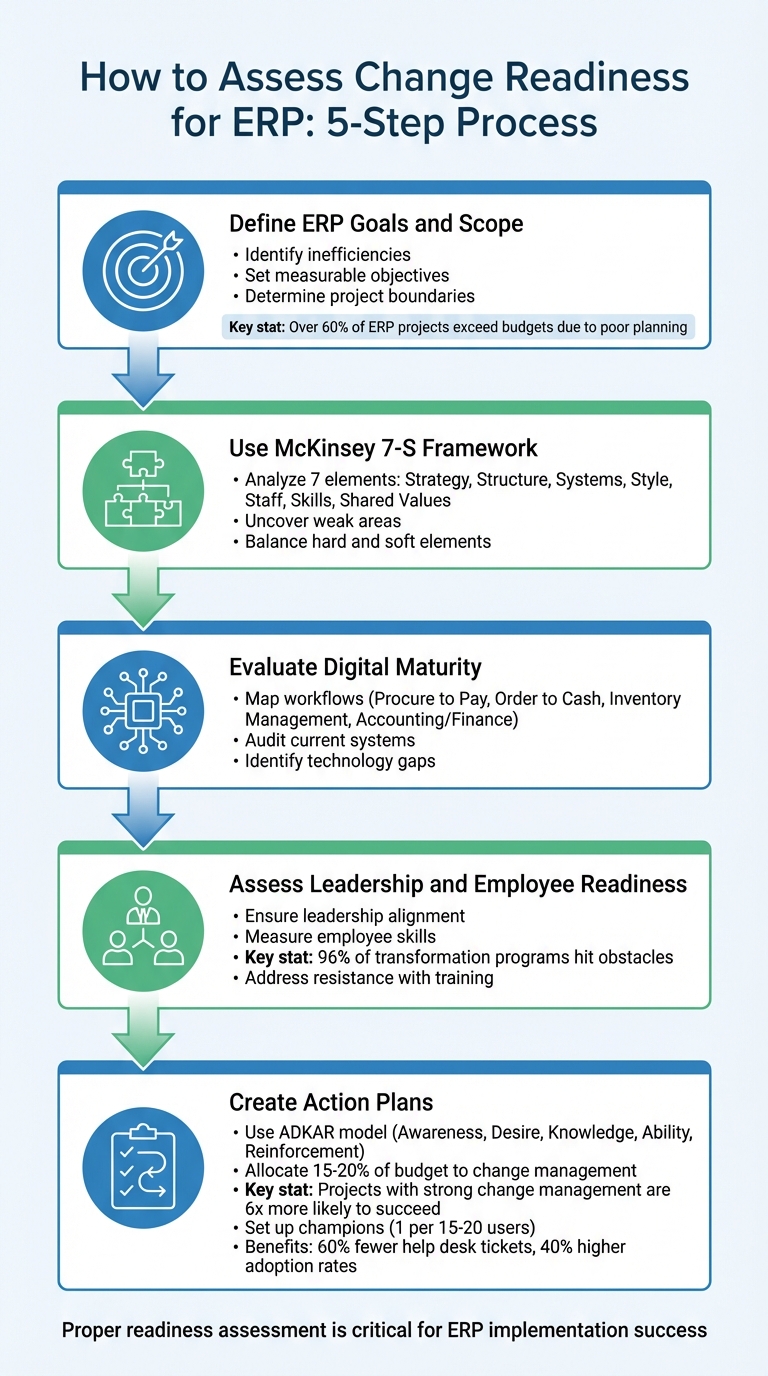
5-Step ERP Change Readiness Assessment Process
Step 1: Define Your ERP Requirements and Project Boundaries
Before diving into ERP readiness, it’s crucial to define your goals and set clear boundaries for the project. This step lays the groundwork for the entire process by pinpointing the business challenges you’re addressing and establishing practical limits for the implementation. A solid plan here ensures you can focus on solving specific issues while keeping everyone on the same page.
Identify Current Problems and Objectives
Start by documenting existing inefficiencies. Are manual processes eating up time? Are outdated systems failing to communicate? Is data hard to access? These pain points should guide your ERP requirements – not the other way around.
Set three clear and measurable objectives, such as increasing operational efficiency, enhancing reporting capabilities, or creating systems that can grow with your business. Then, align these objectives with core business processes like Procure to Pay, Order to Cash, ERP and inventory management, and Accounting/Finance. Don’t forget to identify all integration points, including subsystems and third-party tools. Without this clarity, you risk falling into the same trap as many organizations – over 60% of ERP projects exceed their budgets or fail to meet their goals due to poor planning.
Set Project Boundaries and Identify Key Stakeholders
Define what’s in scope and what’s not. Which departmental processes will be transformed? What workflows are you focusing on? Create a detailed scope document that outlines these specifics, along with performance metrics, timelines, budget limits, and strategies for managing risks. This step is vital for avoiding "scope creep" and ensuring everyone’s expectations are aligned.
Next, bring together a core stakeholder team early on. This team should include:
- An executive sponsor to secure funding and make key decisions
- A project manager to oversee coordination
- End users (or super users) representing various departments
- IT and Finance technical experts
- An implementation partner, if needed, for specialized expertise
Organize structured workshops with these stakeholders to address concerns, validate your approach, and ensure everyone feels invested in the project’s success. Building this collective ownership early can make all the difference.
Step 2: Use the McKinsey 7-S Framework to Evaluate Your Organization
The McKinsey 7-S Framework is a handy tool for assessing your organization’s readiness for ERP implementation. It breaks down seven interconnected elements – Strategy, Structure, Systems, Style, Staff, Skills, and Shared Values – to uncover any weak spots that could disrupt your project. As Simon Bell explains, "The model states that the seven elements need to balance and reinforce each other for an organization to perform well".
Review Strategy, Structure, and Systems
Start with the "hard" elements: Strategy, Structure, and Systems – areas that leadership can directly influence. For Strategy, clarify the purpose of your ERP project. Make sure it aligns with your business goals and strengthens your competitive edge. Then examine your Structure to see if your organizational setup supports the workflows the ERP system will introduce. For example, consider whether decision-making should stay decentralized or shift to a centralized model for better alignment with the ERP.
Next, evaluate Systems – the day-to-day processes and IT tools (like financial platforms, HR software, and communication systems) that the ERP will replace or integrate with. Check for alignment between these systems and your ERP strategy. If a decentralized structure conflicts with a centralized ERP approach, you’ve pinpointed a key issue to address. Also, ensure your communication channels are robust enough to maintain the transparency and collaboration an ERP system demands.
Once you’ve tackled these hard elements, it’s time to shift your attention to the softer, people-focused aspects of the framework.
Evaluate People and Culture
After reviewing the structural components, focus on the "soft" elements: Shared Values, Style, Staff, and Skills. These provide insight into whether your organization’s culture and workforce are ready for the shift. Begin with Shared Values – does everyone understand and agree on the ERP’s purpose and benefits? Without this shared understanding, resistance to change could derail the project.
Next, consider Style – is your leadership equipped to guide the organization through a transition to a data-driven, ERP-centered way of working?. For Staff, gauge whether your team is ready to actively participate in the change or if they are more likely to adopt a passive stance. Finally, conduct a skills gap analysis to identify the expertise needed during and after implementation. Determine who will provide internal support once the system goes live and outline any necessary training plans.
Balancing these structural and cultural elements gives you a clear picture of where gaps exist, setting the stage for targeted solutions in the next steps.
Step 3: Measure Digital Maturity and Process Readiness
Once you’ve assessed your organizational framework, it’s time to take a closer look at your technology and workflows. This step is all about identifying where your current systems fall short and understanding what needs to change before launching your ERP system. As GURUS Solutions wisely states, "Failure to prepare is preparing to fail".
Document Current Processes and Workflows
Start by mapping out your key business processes – think Procure to Pay, Order to Cash, Inventory Management, and Accounting/Finance. Focus on outlining high-level requirements rather than diving into overly detailed blueprints too soon. According to GURUS Solutions, rushing into detailed plans can lead to scope creep and expensive customizations.
Look for manual workarounds that point to gaps in your current technology. Bring in experts and department heads for structured discussions to uncover operational bottlenecks. Once workflows are documented, compare them against the ERP system’s built-in features to identify mismatches and opportunities for improvement.
Rate Your Digital Maturity Level
After documenting workflows, shift your attention to your technological infrastructure. Perform a detailed technology audit, covering software systems, hardware, network capabilities, and integration points across all departments. Create an inventory of your tools, including software and hardware, and evaluate security measures, data management, and reporting capabilities. Pay special attention to technical debt – outdated systems and manual processes that could slow you down.
Finally, map your technology to your business processes to uncover areas of friction. This step is critical because over 60% of ERP projects either exceed their budgets or fail to meet expectations. By understanding these interdependencies, you’ll be better prepared to tackle challenges head-on.
sbb-itb-2560759
Step 4: Assess Leadership Support and Employee Readiness
Technology and processes are important, but at the end of the day, it’s people who make ERP implementations work. With 96% of transformation programs hitting obstacles that could derail success, it’s critical to evaluate both leadership backing and employee readiness before moving forward.
Measure Leadership Commitment and Support
Start by examining whether your leadership team is fully aligned with the ERP vision. A structured diagnostic process can help determine if executives are effectively communicating the reasons behind the transition and are ready to dedicate the necessary resources – both human and financial. Strategic consultant Erika Luger puts it best:
"Change readiness assessments are not a one-size-fits-all approach, but they are essential for understanding an organization’s capacity for successful transformation".
Use tools like surveys, interviews, and workshops to gather insights. Watch for consistency in leadership messaging across departments – mixed signals can confuse employees. Also, be alert to signs of "change fatigue" among executives, which could weaken their support. Share your findings with the leadership team and address any issues with targeted solutions, such as leadership coaching or improved communication strategies.
Once leadership is aligned, turn your attention to the employees who will be interacting with the ERP system daily.
Assess Employee Skills and Willingness to Change
The next step is understanding how prepared your workforce is. Conduct a skill gap analysis to identify areas where training will be necessary. Surveys and focus groups can help gauge employee awareness of the ERP project and their understanding of how it will benefit them personally.
Your organizational culture plays a big role here. Whether your workplace leans toward hierarchy, collaboration, or innovation, it will shape how you approach the transition. Create open channels for feedback and forums to surface any resistance early on. Reviewing your organization’s history with past changes can also provide valuable insights – have employees recently gone through other transformations? If so, are they ready for another? To ease the process, set up a network of "change champions" who can support their colleagues and help smooth adoption.
Step 5: Review Results, Find Gaps, and Create Action Plans
Once you’ve gathered data from your organizational evaluation, digital maturity assessments, and employee surveys, the next step is to turn that information into actionable insights. This process helps you identify challenges and create a clear path forward for your ERP implementation.
Compile and Interpret Assessment Findings
Organize your findings across key areas like Strategy, Structure, Systems, Shared Values, Style, Staff, and Skills. Look for patterns that reveal where your current systems may be slowing down operations or hindering growth. As RSM US explains:
"Completing a detailed ERP readiness assessment can help determine where your current systems are holding you back and take a deeper look at factors and considerations that lead to implementation success".
Using a standardized checklist, pinpoint the specific technical and functional gaps your ERP system needs to address. These could range from improving operational visibility to streamlining processes or resolving integration challenges. By documenting these gaps in an "ERP statement of readiness", you establish a baseline that informs the next steps in your planning process.
Create a Gap Mitigation Plan
Next, craft targeted action plans to close the gaps you’ve identified. The ADKAR model is particularly effective here, as it focuses on individual-level change through five stages: Awareness, Desire, Knowledge, Ability, and Reinforcement. This approach is backed by data showing that projects with strong change management are 6x more likely to succeed than those without it.
Plan to allocate 15-20% of your ERP budget to change management initiatives. Also, set a 30-60 day deadline post-go-live to phase out legacy systems and eliminate reliance on outdated spreadsheets. Establish a network of champions – one for every 15-20 users – to support their peers. This strategy can lower help desk tickets by 60% and boost user adoption rates by 40%. Communicate the "why" behind the change early through town halls and leadership messages. For employees hesitant about training, highlight the long-term benefits: 20 hours of training can save over 500 hours of manual work annually.
Tools for ERP Readiness Assessment
Different tools can help you evaluate readiness and address gaps effectively. Here’s a comparison of the main frameworks:
| Assessment Tool | Primary Purpose | Key Focus Areas |
|---|---|---|
| McKinsey 7-S Model | Analyzes organizational alignment and coherence. | Strategy, Structure, Systems, Shared Values, Style, Staff, Skills. |
| ADKAR Model | Evaluates individual readiness for change. | Awareness, Desire, Knowledge, Ability, Reinforcement. |
| ERP Readiness Checklist | Identifies technical and functional gaps. | System weaknesses, growth capacity, process bottlenecks. |
| Stakeholder Surveys | Measures sentiment and willingness to change. | Employee buy-in, leadership commitment, perceived pain points. |
The right combination of tools depends on your organization’s needs. For example, the McKinsey 7-S model is ideal for addressing broader organizational issues, while ADKAR focuses on preparing individuals for change. Together, these tools help solidify your readiness assessment, laying a strong foundation for a successful ERP implementation.
Conclusion
Conducting a thorough change readiness assessment is essential for ensuring a smooth ERP implementation. With research showing that 96% of transformation programs encounter obstacles, taking the time to evaluate your organization’s readiness can help avoid costly missteps.
The five-step process discussed here highlights key areas to watch for, such as hidden resistance, leadership disagreements, and gaps in organizational capacity – issues that may not be apparent when focusing solely on strategy. This approach emphasizes why readiness assessments are a critical part of any ERP transition.
Additionally, industry-specific tools like Blu Banyan‘s SolarSuccess can simplify implementing solar ERP software by addressing specialized needs. For example, SolarSuccess offers built-in features tailored to solar operations, such as project management, inventory tracking, and real-time analytics. By meeting the unique demands of specific industries, solutions like this not only enhance operational efficiency but also demonstrate clear value to employees.
FAQs
When should we run an ERP change readiness assessment?
When planning to implement or transition to a new ERP system, it’s crucial to conduct a change readiness assessment early in the process. This assessment helps gauge how prepared your organization is for the shift, pinpoint areas that need attention, and tackle any obstacles that could arise. By starting early, you can align processes, address cultural factors, and ensure stakeholders are ready – minimizing risks and setting the stage for a smoother, more successful implementation.
What data should we collect to measure readiness?
To gauge your organization’s readiness for ERP implementation, focus on gathering data in these critical areas: organizational processes, employee skills and training requirements, existing technology infrastructure, data quality, stakeholder support, and change management capabilities. This evaluation highlights current strengths and gaps, ensuring the organization is adequately prepared for a smooth ERP rollout.
How do we reduce employee resistance to ERP?
To ease employee resistance when implementing an ERP system, it’s essential to focus on effective change management. Start by involving employees early in the process – this helps them feel included and builds a sense of ownership. Be clear and open about the ERP’s benefits, showing how it will make their work easier or more efficient.
Comprehensive training is another key step. When employees feel confident using the new system, they’re less likely to resist. Identify and empower "change champions" within your team – these are employees who can advocate for the ERP and maintain a positive outlook. Lastly, listen carefully to employee feedback and address concerns proactively.
These actions not only smooth the transition but also boost adoption, setting the stage for lasting success.
