







The United Kingdom has long been regarded as one of the most regulated gambling markets in the world, with the Gambling Commission overseeing licensing, compliance, and consumer protection since the Gambling Act of 2005 came into force. For decades, the dominant model required bettors to submit extensive personal documentation before placing a single wager — a process that, while designed to protect vulnerable individuals and prevent money laundering, also created significant friction for ordinary users. Over the past several years, however, a measurable shift has occurred. A growing segment of the UK gambling market now caters to players who prefer to bet without undergoing the traditional verification process, and the emergence of platforms and resources dedicated to explaining this space reflects how substantial that shift has become.
To understand why no verification betting has gained traction, it is necessary to first understand what verification requirements actually entail and why they exist. Under the UK Gambling Commission’s licensing conditions, operators are obligated to conduct Know Your Customer checks — commonly referred to as KYC — as part of their anti-money laundering and responsible gambling frameworks. These checks typically require players to submit government-issued identification, proof of address such as a utility bill or bank statement, and in many cases, source of funds documentation to demonstrate that the money being wagered has been obtained legitimately.
The rationale is sound in principle. Money laundering through gambling is a documented concern, and the Financial Action Task Force has consistently flagged the sector as a medium-to-high risk area for illicit financial flows. Equally, the identification of problem gamblers relies in part on operators knowing who their customers are, enabling the application of spending limits, self-exclusion tools, and intervention protocols. The Gambling Commission’s 2020 review of online gambling reinforced these obligations, and subsequent consultations in 2021 and 2022 pushed toward even more stringent affordability checks — a direction that drew considerable controversy from both operators and recreational bettors who felt the proposals were disproportionate.
The friction generated by these requirements, however, is not merely a matter of inconvenience. Research conducted by the Remote Gambling Association in the years following the 2005 Act’s implementation consistently showed that a significant percentage of users abandoned registration processes when asked to upload documents. Conversion rates at licensed UK operators dropped measurably at the verification stage, and a portion of those users migrated to unlicensed or offshore platforms that imposed no such requirements. This unintended consequence — driving players away from regulated environments and toward less safe alternatives — became a central tension in policy discussions throughout the 2010s.
The term “no verification betting” can be somewhat misleading if taken too literally. In the strictest sense, no operator accepting real-money wagers from UK residents can entirely bypass identity verification and remain compliant with UK law. What the term actually describes, in most practical contexts, is a spectrum of approaches that minimise or delay the documentation burden on the player. Several distinct models have emerged within this spectrum, each with different implications for the user experience and regulatory compliance.
The most common model involves operators licensed in jurisdictions outside the UK — most frequently Malta, Gibraltar, Curaçao, or the Isle of Man — that accept UK players without requiring upfront document submission. These operators typically rely on payment method verification as a proxy for identity confirmation, reasoning that if a player has passed the KYC checks of a regulated bank or payment processor, a secondary layer of documentation is redundant. Cryptocurrency-based platforms represent a further variation, where the pseudonymous nature of blockchain transactions allows for betting without linking activity to a verified real-world identity, though this model carries its own risks and sits in a legally ambiguous space with respect to UK consumer protection law.
A second model, increasingly visible in the market, involves operators that conduct verification checks only at the withdrawal stage rather than at registration or deposit. Players can fund an account and begin wagering immediately, with documentation requested only when they attempt to cash out winnings. This approach reduces abandonment at the onboarding stage while still technically fulfilling AML obligations before money leaves the platform. Critics argue this model creates a perverse incentive — players may wager and lose without ever being subject to the checks designed to protect them — but proponents maintain that it represents a pragmatic balance between regulatory compliance and user experience.
Resources dedicated to cataloguing and explaining these operators have grown considerably. Sites like https://www.noverificationbet.com aggregate information about platforms operating in this space, helping users understand the differences between offshore licensing regimes, the practical implications of delayed verification, and the trade-offs involved in choosing operators outside the UK Gambling Commission’s direct jurisdiction. The existence of such resources reflects genuine consumer demand for clarity in a market that has become fragmented and, for many bettors, confusing.
Understanding why UK bettors have increasingly sought out no verification options requires looking at both push and pull factors. The push factors originate largely from changes in the regulatory environment that many recreational gamblers experienced as intrusive. The Gambling Commission’s 2021 consultation on affordability checks proposed that operators should conduct financial vulnerability assessments on customers showing certain loss patterns — a proposal that would have required players to submit payslips, bank statements, and other sensitive financial documents as a condition of continued play. Although the final guidance adopted in 2023 was somewhat less prescriptive than the initial proposals, the direction of travel alarmed a substantial portion of the betting public.
YouGov polling conducted in 2022 found that a majority of UK adults who gambled recreationally expressed concern about the amount of personal financial information operators might be required to collect. A notable proportion indicated they would consider switching to offshore or unlicensed platforms if affordability checks became mandatory at low spending thresholds. This polling data was cited extensively during parliamentary debates on gambling reform and contributed to the eventual decision to implement a more tiered approach to financial risk assessments in the 2023 white paper on gambling regulation.
The pull factors are equally significant. Offshore operators have invested heavily in user experience, offering instant account creation, seamless mobile interfaces, and fast payment processing through methods like e-wallets and cryptocurrencies that can bypass traditional banking friction. For a bettor who wants to place a wager on a live sporting event and has a limited window in which to do so, the difference between a five-minute registration process and a multi-day verification queue is commercially decisive. The live betting market — which has grown substantially since in-play wagering became widespread in the mid-2010s — is particularly sensitive to this kind of friction because the value of a bet can expire within minutes.
There is also a generational dimension to consider. Younger bettors who came of age in the era of instant digital services — same-day delivery, immediate streaming access, frictionless app-based payments — have markedly lower tolerance for bureaucratic onboarding processes than older cohorts who grew up placing bets in physical betting shops where a conversation with a cashier served as an informal identity check. The demographic most actively seeking no verification options skews toward the 18-35 age group, according to several industry surveys conducted between 2020 and 2023, and this cohort is also the most comfortable using cryptocurrency and alternative payment methods that facilitate access to offshore platforms.
The growth of no verification betting is not without genuine risk, and any honest account of this market segment must engage seriously with the consumer protection implications. The UK Gambling Commission’s licensing regime exists for reasons that go beyond bureaucratic box-ticking. Operators holding a UK licence are subject to mandatory participation in the National Self-Exclusion Scheme, known as GAMSTOP, which allows individuals who have identified themselves as problem gamblers to block access to all licensed UK gambling sites simultaneously. Offshore operators are under no obligation to participate in GAMSTOP, and many do not, meaning that a self-excluded individual can access these platforms without any automatic barrier.
This is a concrete and measurable harm. Research published by the charity GambleAware in 2021 found that a substantial proportion of individuals who had self-excluded through GAMSTOP subsequently gambled on offshore sites not covered by the scheme. The psychological mechanisms underlying problem gambling — impulsivity, distorted probability assessments, the inability to stop despite negative consequences — are not addressed by the mere availability of self-exclusion tools if those tools are easily circumvented. For this population, the convenience of no verification betting is not a neutral feature but an active risk factor.
Noverificationbet and similar resources operating in this space have generally acknowledged this dimension, framing no verification betting as suitable for recreational bettors who are not subject to self-exclusion and who are capable of managing their own gambling behaviour responsibly. The responsible framing is important, but it also has limits: the population most at risk from unrestricted access to gambling is, by definition, the population least likely to accurately self-assess that risk. This is not a problem unique to the no verification segment — it applies to all forms of gambling — but the removal of regulatory friction does reduce the number of intervention points at which harm might be identified and addressed.
From a financial safety perspective, bettors using offshore platforms also have reduced recourse in the event of a dispute. UK-licensed operators are required to use an approved Alternative Dispute Resolution service, and the Gambling Commission can take enforcement action against licensees who fail to pay out legitimate winnings or engage in unfair practices. Offshore operators are subject to no such obligations under UK law, and while many Maltese and Gibraltar-licensed operators maintain high standards, the regulatory backstop is materially weaker. The Isle of Man Gambling Supervision Commission and the Malta Gaming Authority do maintain complaint mechanisms, but the practical ability of a UK consumer to pursue a dispute through a foreign regulator is limited.
Noverificationbet has positioned itself as a source of information that helps bettors navigate these trade-offs with greater awareness, providing context about the licensing regimes of individual operators and the practical implications of choosing platforms outside the UK Gambling Commission’s jurisdiction. Whether informational resources of this kind meaningfully reduce consumer harm or primarily serve to lower the friction of accessing offshore gambling is a question that regulators, researchers, and consumer advocates have not yet fully resolved.
The rise of no verification betting in the UK is ultimately a product of a regulatory environment that has, over time, imposed increasing documentation burdens on recreational bettors in pursuit of legitimate policy goals, combined with the technological and commercial capacity of offshore operators to offer a materially different user experience. The tension between consumer protection and consumer autonomy — between the state’s interest in preventing harm and the individual’s interest in making their own choices about legal leisure activities — is not unique to gambling, but it is particularly acute in this sector because the potential harms are severe and the affected population includes some of the most vulnerable individuals in society. As the UK government continues to refine its approach to gambling regulation following the 2023 white paper, the question of how to bring offshore, no verification operators within a more protective framework without simply driving demand further underground remains one of the most difficult challenges in consumer financial regulation. The market will not contract simply because regulators prefer that it did; understanding why it exists and what it offers is a prerequisite to addressing its risks effectively.


Managing solar projects with disconnected tools is inefficient and costly.
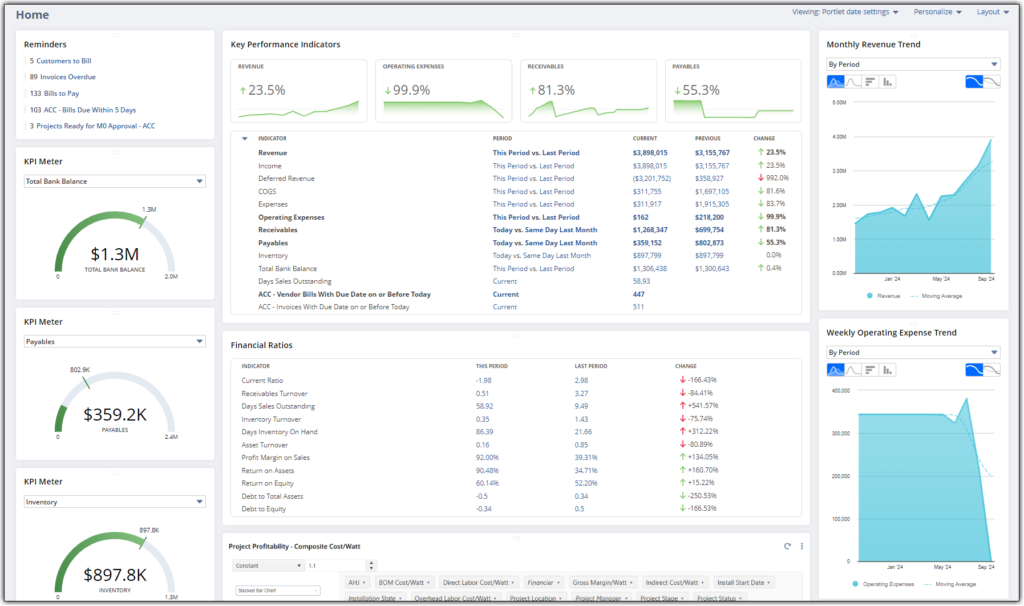
SolarSuccess gives you full financial and operational control in one integrated system.
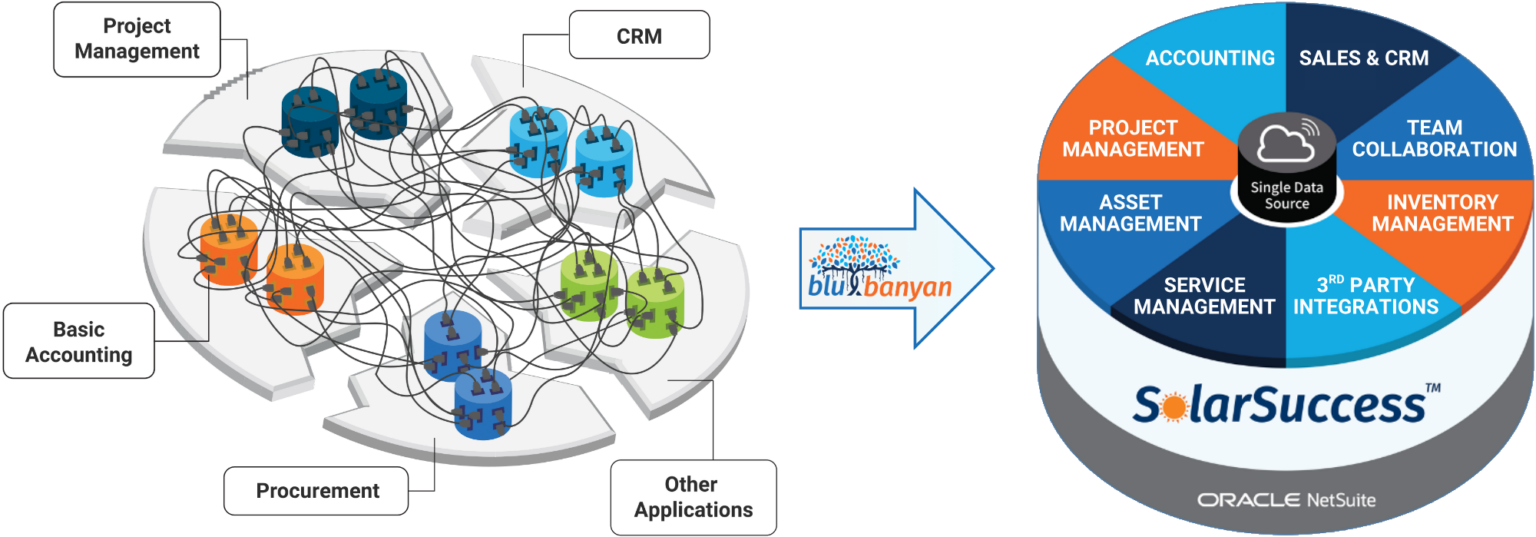
Get real-time visibility, automate critical processes, and scale profitably – without the chaos of disconnected systems.
“I need to know where every project stands — without digging through spreadsheets or chasing updates.”
See project costs, timelines, and performance in real time—without chasing updates.
Disconnected tools make it hard to track financials and progress. SolarSuccess gives leadership live visibility into every project, helping prevent budget overruns, delays, and inefficiencies.
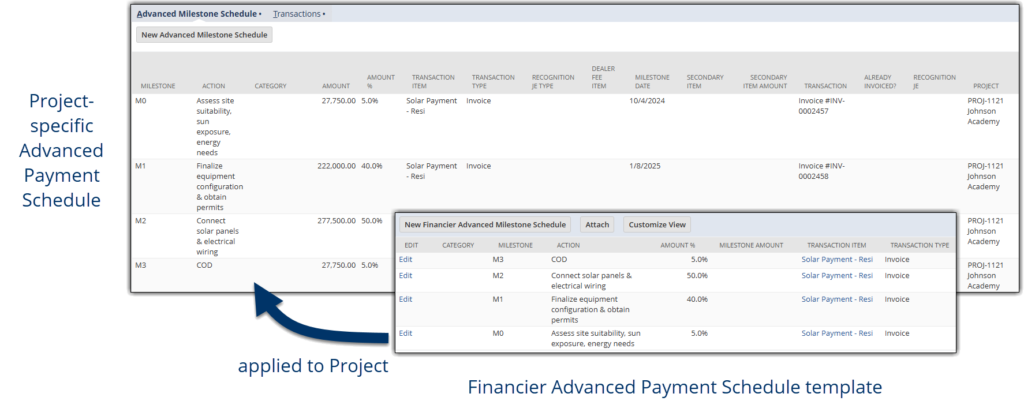
“Too many tasks stall because we’re waiting on approvals or chasing paperwork—we need a faster way to move projects forward.”
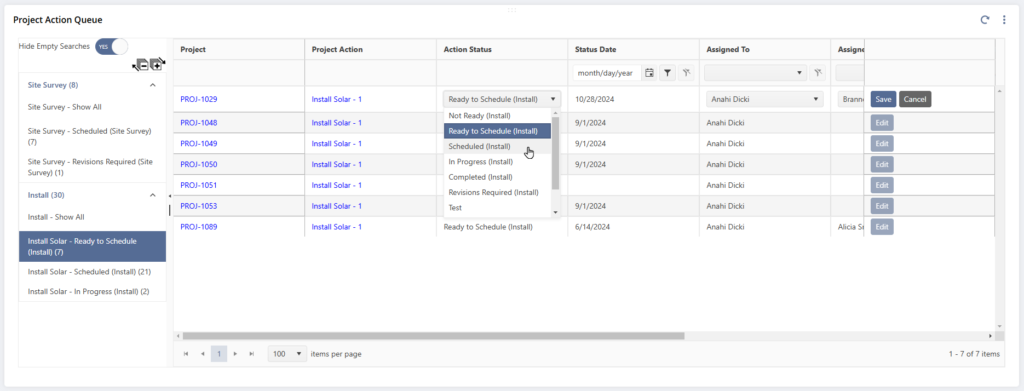
Eliminate bottlenecks by automating approvals, invoicing, and task management.
Slow manual processes create delays and inefficiencies. SolarSuccess automates key workflows, reducing admin work and keeping projects moving—so you can deliver faster with fewer resources.
“I need a high-level view of all our projects—without sifting through 10 different reports.”
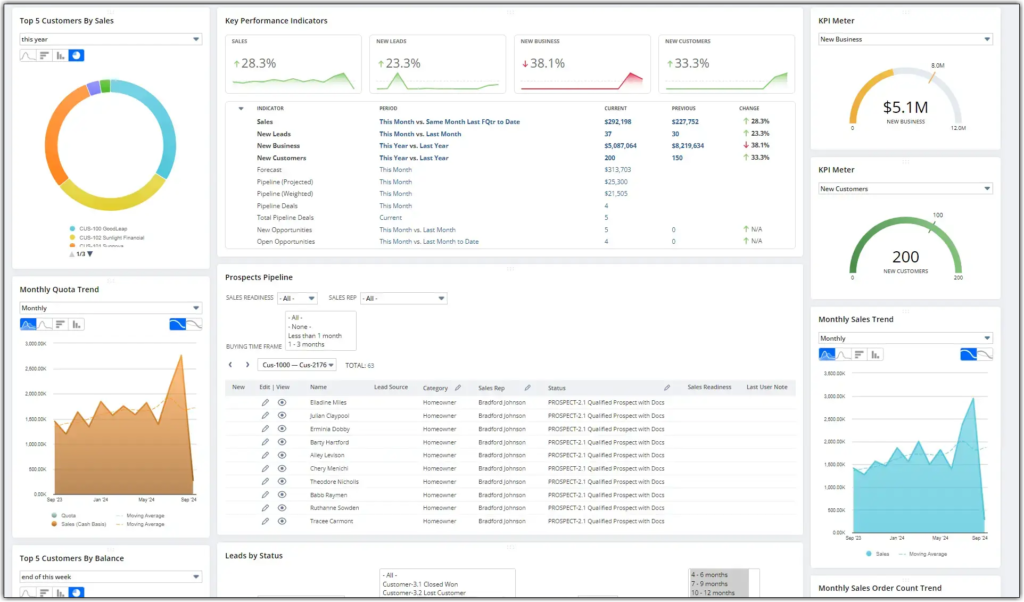
Track performance across multiple projects, regions, and teams—all in one dashboard.
Scaling means managing many projects at once, but disconnected systems make it hard to see the big picture. SolarSuccess provides portfolio-wide insights, helping leaders make data-driven decisions and optimize profitability.
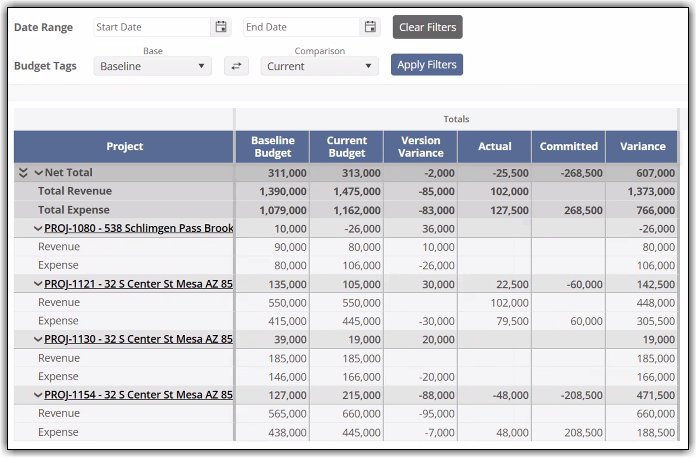
Role-Based Dashboards & Permissions – Customize views and control access so teams see only what they need.
Time & Expense Tracking – Log labor hours and project expenses directly in the system for accurate cost tracking.
Automated Change Order & Contract Management – Track, approve, and document contract changes without manual paperwork.
Advanced Budget Forecasting – Use real-time financial data to predict costs and profitability before making key decisions.
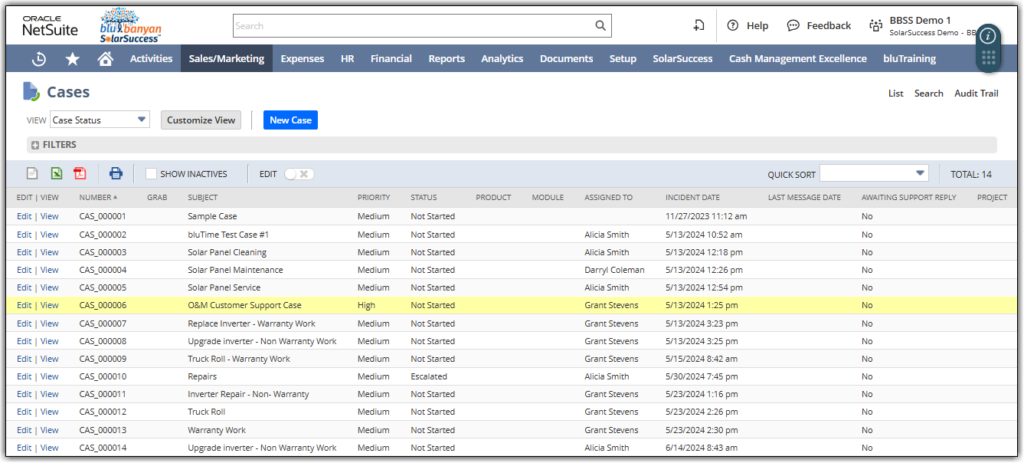
Warranty & Service Ticketing – Manage post-installation service requests, warranties, and maintenance in a single system.
Seamless Accounting & ERP Integrations – Sync financial data with existing accounting systems for effortless reconciliation.
Learn how solar companies of all sizes use SolarSuccess to streamline operations, increase profitability, and scale with confidence.
Typical areas for return include:
1. More transaction automations allow for fewer people in the office.
2. Automatic milestone-based invoicing reduces days-to-payment – getting our clients paid faster.
3. Increased visibility of real-time project profitability allows for better pricing and management decisions leading to greater profitability overall.
4. Automated calculations and journal entries save accounting even more time.
SolarSuccess isn’t just numbers – it’s real, measurable impact. Book a demo to see how much you can save.
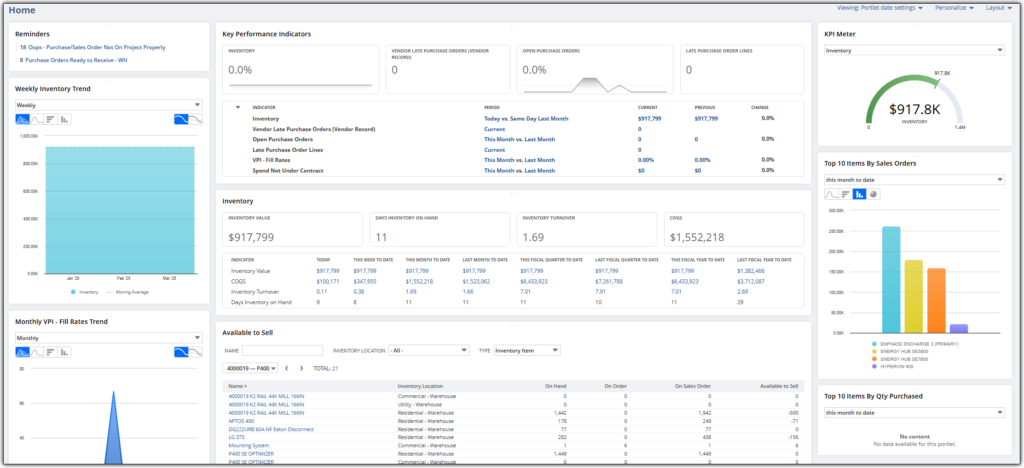
Our solar solutions provide complete oversight on cash flow, sales, costs, profitability, project status, inventory, updates and alerts, and other functions key to a solar installer’s success.
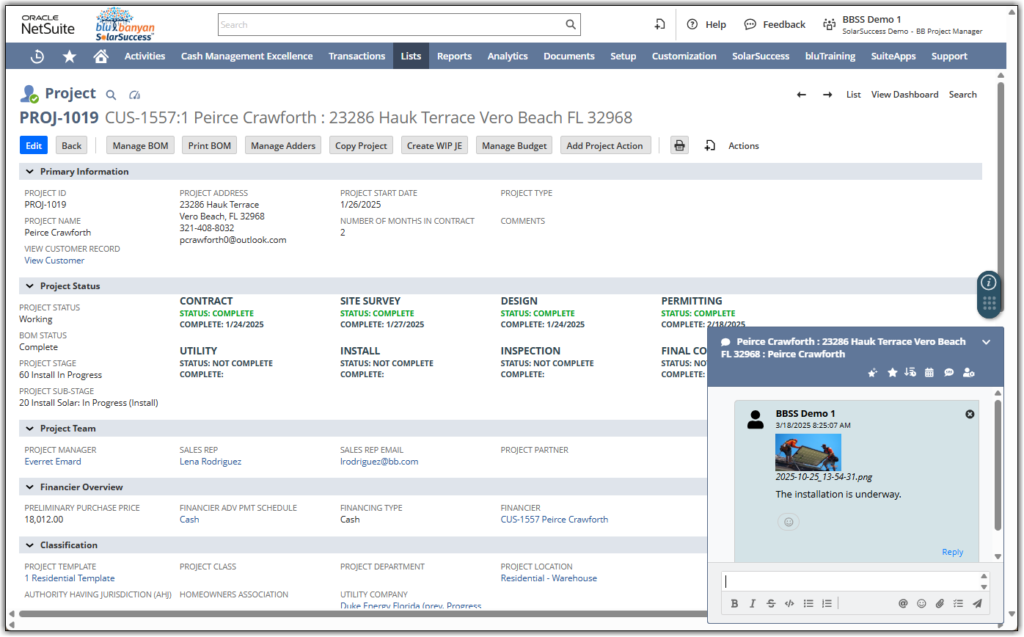
Collaborate and communicate easily between teams and different departments to share data from a single data source. SolarSuccess provides real-time visibility across all key functional areas including accounting, CRM, project management, and inventory tracking through the use of personalized dashboards. bluChat enables all authorized users – staff, partners, vendors, and customers – to interact directly on a problem record for faster issue resolution.
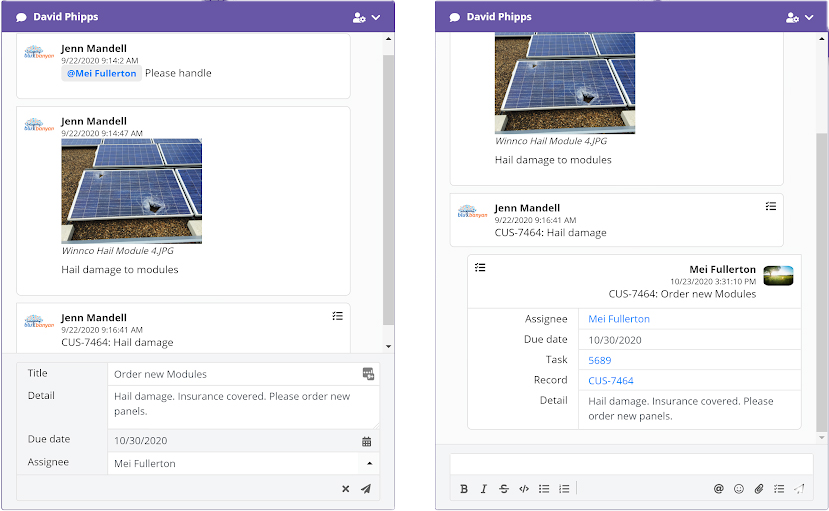
bluBudget is a NetSuite-native Financial Planning and Accounting (FP&A) application that gives project-driven businesses real-time visibility into costs, revenue, and margins—helping finance and operations teams move beyond spreadsheets and disconnected tools.
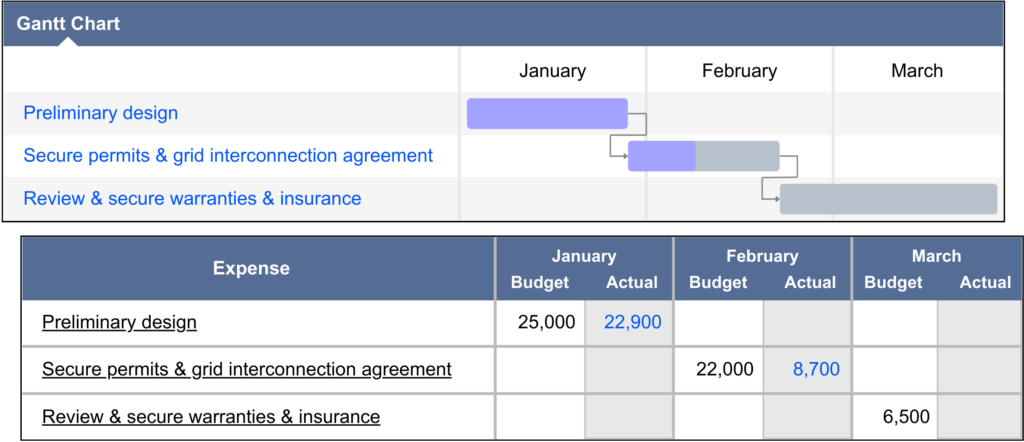
SolarSuccess works seamlessly with bluBudget to keep project schedules and budgets moving in lockstep. When project timelines shift—as they often do in solar—budget timing updates automatically, so project managers don’t have to track changes manually. This alignment cuts carrying costs, keeps forecasts grounded in reality, and gives project-based teams a clearer picture of cash needs, margins, and delivery pace.
Used together, SolarSuccess and bluBudget deliver compounding benefits that strengthen project control and financial clarity across the entire solar project lifecycle.


bluBudget was recognized for solving one of the biggest challenges facing large-scale solar companies: delivering profitable projects in a low-margin, capital-intensive environment.
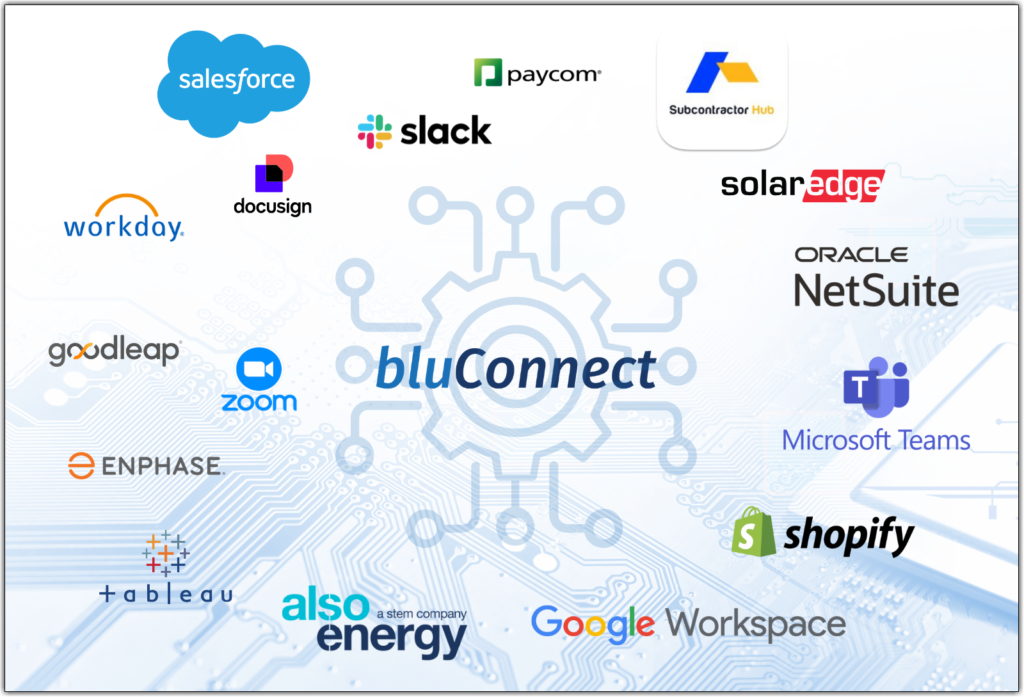
SolarSuccess replaces disconnected tools and spreadsheets while integrating with the systems you still want.
Eliminate Double Data Entry – Sync financials, project updates, and approvals across your tools automatically.
Keep Your Accounting Accurate – SolarSuccess gives you real-time financial tracking.
Faster Payments & Reconciliation – Connects with banks and lenders for streamlined invoicing and funding.
No More Scattered Documents – Keep contracts, permits, and compliance records centralized and accessible.
Adoption is Easy – Works alongside your existing software—no disruption to your current processes.
From finance to field teams, SolarSuccess connects every part of your business in one platform. Choose a function below to see how we help.
Watch the video to find out more!
You’ll meet your dedicated onboarding specialist to align on goals, timelines, and key workflows.
We configure your environment, begin migrating data, and prepare your team for a smooth transition.
We work with department leads to build, test, and refine your workflows—across finance, project management, procurement, and more.
Meanwhile, your team receives role-specific training through live sessions and on-demand modules.
Core teams begin using SolarSuccess in live environments, supported by hands-on guidance.
We finalize your setup based on feedback, migrate all open data and ensure everything is optimized for your operations.
With the platform fully live, leadership has visibility across projects, financials, and assets.
Your teams collaborate seamlessly, manual work is reduced, and your business is set up to scale without adding complexity.

See how SolarSuccess streamlines project management, finances, and operations—all in one powerful platform.
Download the brochure to explore key features, benefits, and real-world impact.
WATCH THE CASE STUDY »
WATCH THE CASE STUDY »
WATCH THE CASE STUDY »

WATCH THE CASE STUDY »
SolarSuccess is built natively on Oracle NetSuite to take advantage of the latest technologies for speed and security. The software also integrates with other leading solar industry software solutions to support the needs of growing businesses.


The solar industry is constantly changing so we’re continuously exploring new technologies and development opportunities that will create value for our customers.
Our team of solar industry experts works with our clients to identify high-value needs and work collaboratively to solve these problems with technical skills and systemic innovation.
Blu Banyan is a SunSpec Alliance member and the leading supporter of the US Department of Energy’s Orange Button Initiative – to establish an Open Data Exchange Format for the solar industry.

We pride ourselves on our technical support team who are available to answer any questions or concerns you may have. With a dedicated development team working on your success, we’ll always be there when you need us most.

The US solar industry is expected to continue its strong growth trajectory, thanks to the Investment Tax Credit (ITC) and despite supply chain constraints and other challenges. Forecasting a substantial recovery, solar deployments in 2023 are projected to reach 29 GWdc, a significant increase from the previous year’s 21 GWdc, according to the Solar Energy Industries Association (SEIA).
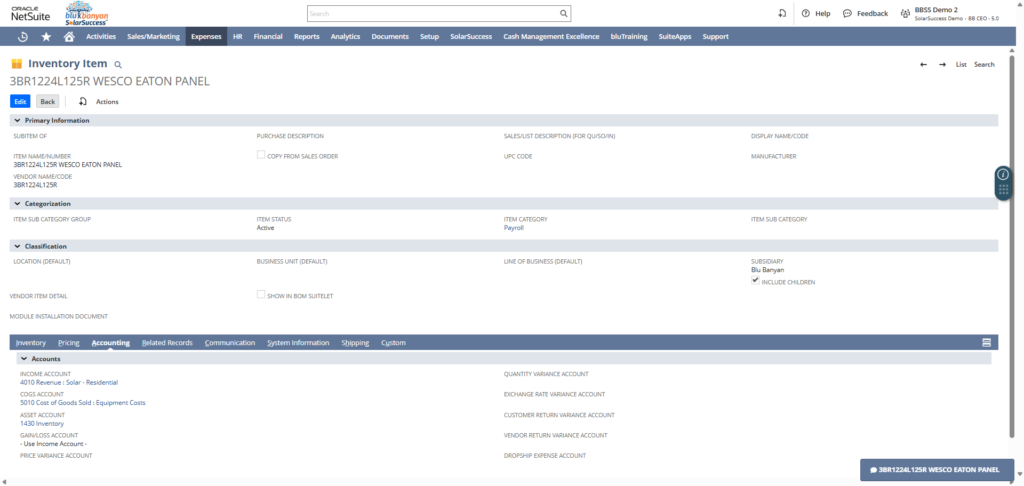
Blu Banyan SolarSuccess is designed to meet the specific challenges at the core of a solar installer business, with the goal of enabling the efficiencies necessary to reduce soft costs. All aspects of the business—including sales pipeline management, CRM, accounting, purchasing, installation project management (including project costing and profitability), inventory management, customer invoicing, universal financier connectivity, and business intelligence—all share data from a single source. The system provides end-to-end visibility on cash flow, profitability, acquisition costs, project summaries and alerts, and other functions that are keys to a solar installer’s success.
Having a unified system that ties your accounting system to your supply chain, project management, CRM, marketing, and fulfillment systems allows you to see your cash flow and measure efficiencies across multiple areas. Our solar solutions system will alert you to specific areas of deviation from plan so that you can then zero in on problem areas or opportunities to maximize revenues.
Typical implementations take about 3-4 months, depending on what tools the client is already using, and how extensive and complex data import from the existing system may be. Multi-phased approaches are available to solve the most pressing needs (usually connecting project milestones to accounting events), followed by full integration of CRM and other applications.
No. SolarSuccess is designed to fit into your existing processes without slowing down your team. We integrate with tools you already use—like QuickBooks, ERPs, and procurement systems—to migrate data so there’s no need to start from scratch. Training is structured around your team’s schedule, ensuring adoption without workflow interruptions. Most companies see efficiency improvements within weeks as manual processes are replaced with automation. The switch isn’t overwhelming—our process ensures minimal downtime and maximum results.
QuickBooks and spreadsheets weren’t built for solar at scale, which means you’re likely spending too much time on manual work and reconciling data across disconnected systems. SolarSuccess centralizes everything, from project financials to procurement and asset management, so you always have real-time insights. It automates invoicing, approvals, and cost tracking to eliminate errors and prevent budget overruns. It also provides portfolio-wide visibility, so you can see financial and operational performance across multiple projects instantly. If you’re relying on QuickBooks and spreadsheets, you’re spending time managing data instead of managing your business.
Yes. We make sure your team is trained, comfortable, and fully onboarded before launch. Our customized training sessions are tailored to different roles, ensuring that finance teams, project managers, and field teams all get the support they need. SolarSuccess is designed specifically for solar companies, making it far more intuitive than generic project management or accounting software. Most teams see improved productivity within weeks, and leadership gains instant visibility across the entire business.
You’re never on your own. Our expert support team is available whenever you need help. We provide ongoing check-ins to ensure SolarSuccess continues to meet your business needs. Each company gets a dedicated customer success manager who understands their goals and processes. The platform is continuously updated and improved, so SolarSuccess evolves with your business. We also have premium support packages available for larger-scale businesses that could do with extra support. Think of us as your long-term partner, not just a software provider.
SolarSuccess will be updated twice a year, in line with NetSuite system updates. There is no additional cost to updates; clients automatically get the updates, benefiting from new product features, including on-going updates to solar financier project templates, keeping you aligned with the latest changes with minimal effort.