
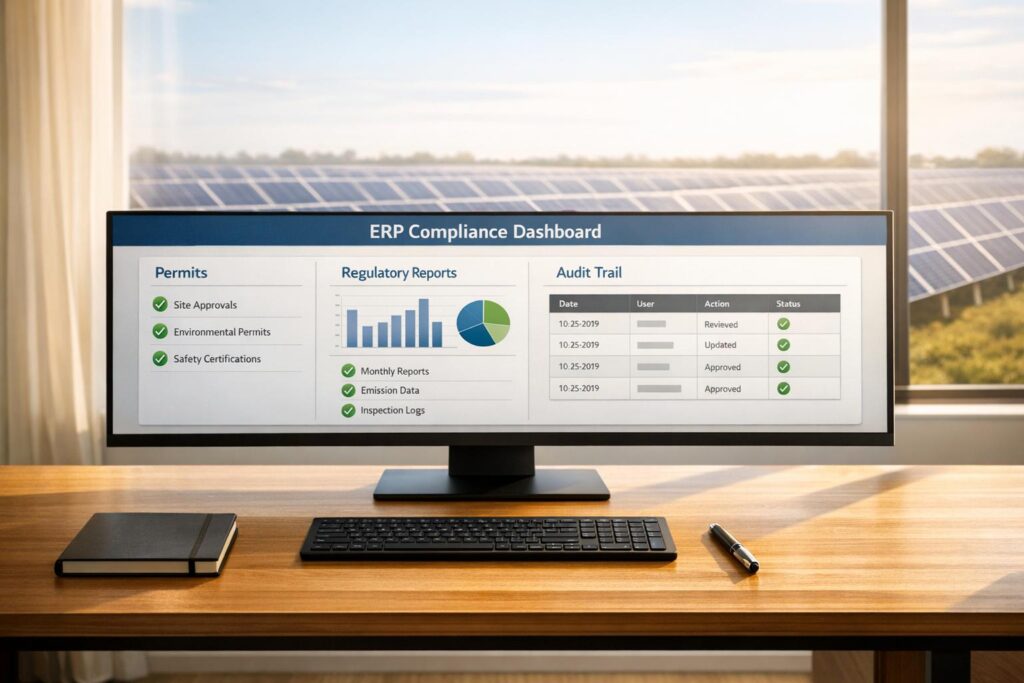
Managing solar compliance is tough. With 36,177 jurisdictions in the U.S., each enforcing unique building, electrical, and fire codes, solar companies face overwhelming regulatory challenges. Many rely on disconnected tools, creating inefficiencies and errors.
ERP systems solve this problem by:
- Centralizing all compliance data in one platform.
- Automating tasks like tracking permits, certifications, and deadlines.
- Providing real-time dashboards and audit trails for transparency.
- Reducing manual errors and labor costs by integrating accounting, project management, and CRM systems.
Results? Companies adopting ERP solutions report labor savings of 10–15%, faster financial closes, and improved compliance accuracy. Tools like SolarSuccess, built for the solar industry, streamline operations and help manage complex regulations effectively.
Key takeaway: ERP systems aren’t just about efficiency – they’re essential for navigating the solar sector’s regulatory maze.
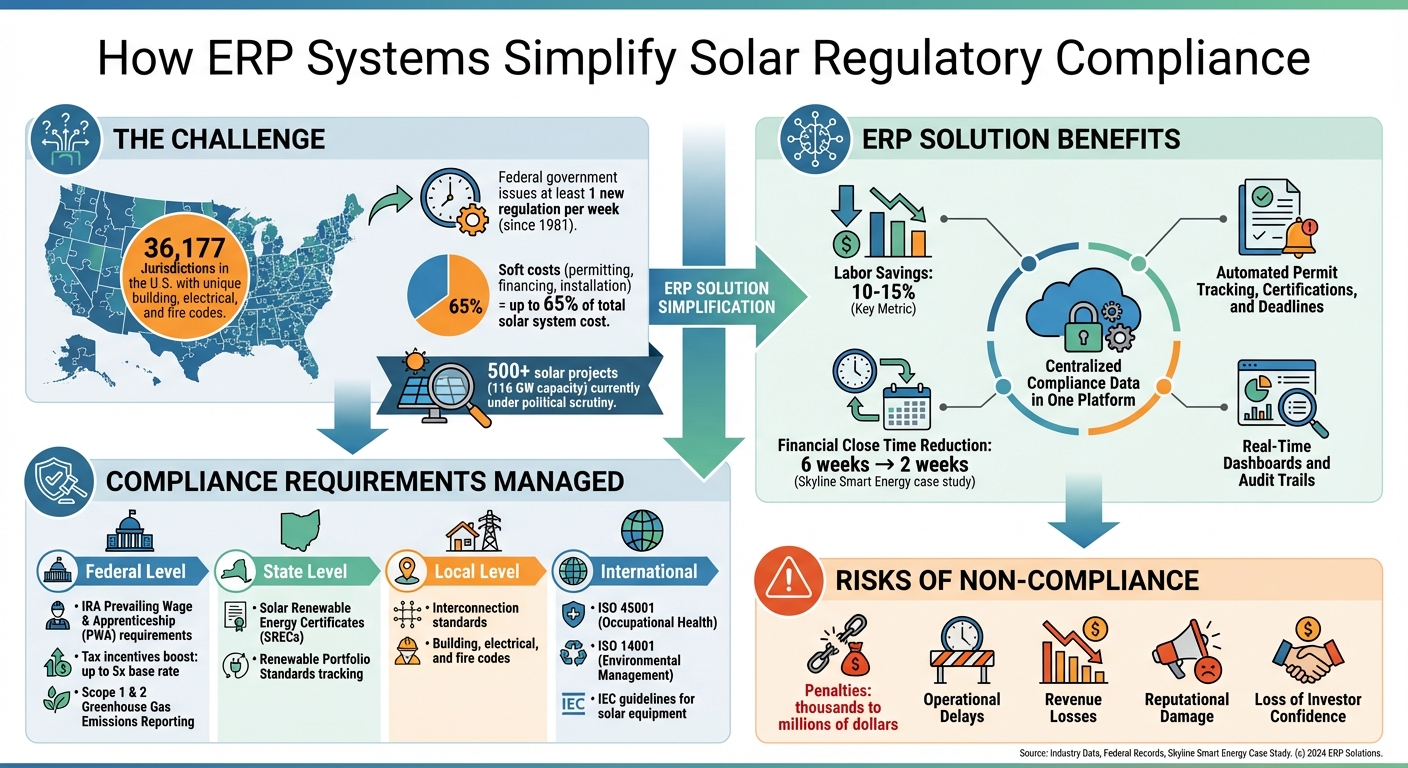
How ERP Systems Simplify Solar Regulatory Compliance: Key Benefits and Statistics
Regulatory Reporting Challenges in the Solar Industry
Multi-Level Compliance Requirements
Solar companies face a maze of regulations that vary across federal, state, and local levels. At the federal level, businesses must meticulously document compliance with the Inflation Reduction Act‘s Prevailing Wage and Apprenticeship (PWA) requirements. Meeting these standards can significantly boost base tax incentives – by up to five times. Additionally, federal agencies demand emissions reporting, with publicly traded companies increasingly required to disclose Scope 1 and Scope 2 greenhouse gas emissions.
On the state side, companies operating in areas with "solar carve-outs" must track and report Solar Renewable Energy Certificates (SRECs) to prove adherence to Renewable Portfolio Standards. Local jurisdictions add another layer of complexity, as solar projects must comply with a patchwork of interconnection standards that dictate how systems connect to the electric grid. Beyond domestic requirements, international standards like ISO 45001 (occupational health and safety), ISO 14001 (environmental management), and IEC guidelines for solar equipment further complicate the regulatory landscape.
This intricate system of overlapping mandates makes manual tracking not only inefficient but also prone to costly errors.
Problems with Manual Reporting Processes
Relying on manual processes for compliance introduces significant challenges. Many solar companies depend on disconnected tools – such as QuickBooks for accounting and Salesforce for customer management – that lack integration. This forces teams to manually transfer data between systems, increasing the likelihood of errors.
The sheer volume of regulations compounds the issue. Since 1981, the federal government has issued at least one new regulation every week. Lisa Schwarz, Senior Director of Global Product Marketing at NetSuite, highlights the risks:
"Managing that process manually poses serious challenges. Redundant data entry, for example, can lead to errors, which can lead to costly penalties."
Manual systems also fall short in providing the traceability demanded by regulators like OSHA or the EPA, which is essential for safety management and recall procedures.
Risks of Non-Compliance
Failing to meet compliance requirements can have severe financial and operational repercussions. Penalties can range from thousands to millions of dollars, while companies also risk operational delays, revenue losses, and reputational damage. With over 500 solar and storage projects – representing nearly 116 GW of capacity – currently under political scrutiny, compliance failures could erode public trust and shake investor confidence.
sbb-itb-2560759
ERP Features That Simplify Regulatory Reporting
Centralized Document Storage
Modern ERP systems streamline the installation process by replacing scattered applications with a single, unified database. This centralized approach allows solar companies to store all compliance-related documents – such as permits, contracts, and inspection records – directly within the ERP, linking them to specific projects. Instead of juggling multiple platforms for accounting, project management, and file storage, teams can manage everything in one place.
This feature is especially crucial in managing compliance across the U.S., where there are 36,177 different Authorities Having Jurisdiction (AHJs), each with its own inspection and approval codes. With built-in version tracking, ERP systems maintain a complete history of document revisions, ensuring an auditable record of every change. So, when an inspector requests documentation, teams can quickly locate the exact version needed, avoiding the hassle of sifting through emails or shared drives.
Specialized tools like bluDocs further enhance document management by handling the large volumes of compliance paperwork solar installers often deal with. By consolidating all project-related documents into a single repository, companies reduce the risk of missing critical permits or certifications during audits. Additionally, ERP systems can automate compliance tracking and send alerts for upcoming deadlines, ensuring nothing slips through the cracks.
Automated Compliance Tracking
Keeping track of regulatory deadlines manually can be chaotic, but ERP systems take the guesswork out of the process. These platforms automatically monitor key dates, such as permit renewals, certification expirations, and regulatory milestones. Configurable dashboards provide real-time insights into compliance metrics for active projects, while automated alerts notify team members well in advance of critical deadlines.
Workflow automation ensures every transaction follows pre-approved paths, reducing the likelihood of compliance violations. For instance, project milestones can trigger accounting events and generate necessary compliance documents without requiring manual input. This is particularly beneficial when managing soft costs – such as permitting, financing, and installation – which can account for up to 65% of the total cost of a new solar system.
Cloud-based ERP vendors also keep their systems updated to reflect evolving regulations, sparing companies the burden of manual adjustments. This is especially valuable given the federal government’s consistent issuance of new manufacturing regulations – at least one per week since 1981. Solar-specific ERP systems can even integrate with databases like the AHJ Registry to track building, electrical, and fire codes across thousands of jurisdictions, automatically alerting teams when local requirements change.
Another key feature is traceability. ERP systems track each component’s source and usage, which is essential for meeting safety regulations and managing recalls. Together, these automated tools ensure compliance is maintained across all projects, while also creating a solid foundation for audits.
Audit Trails and Report Generation
ERP solutions take compliance a step further by offering robust audit trails and efficient report generation. Built-in audit trails provide a complete history of data changes, including details about who accessed, updated, or deleted information, and when these actions occurred. This level of monitoring extends to system configurations, customizations, and master data, allowing leadership to review compliance efforts in real time. As Lisa Schwarz, Senior Director of Global Product Marketing at NetSuite, explains:
"Always-on audit trails let you track changes to transactions and data, including what was changed, who changed it and when."
Drill-through capabilities make audits even easier. Auditors can click on dashboard metrics to access original source documents – like vendor bills or receipts – eliminating the need for additional paperwork and speeding up the review process.
Automated report generation further simplifies compliance by pulling data from a single, unified database. This eliminates the inconsistencies that often arise from manual data entry across multiple spreadsheets. With all accounting, project management, and inventory data synchronized, regulatory filings are accurate and consistent.
Top ERP systems also support independent audit certifications such as SOC 1 Type 2, SOC 2 Type 2 (SSAE18), ISO 27001, and PCI DSS. These certifications are essential for solar companies handling sensitive financial and customer data. Additionally, role-based access controls restrict sensitive information to authorized personnel, meeting the segregation of duties required by many financial regulations.
How to Configure ERP for Regulatory Reporting
Setting Up Compliance Workflows
Start by outlining your regulatory framework. Identify the federal, state, and local regulations that apply to your solar operations. This foundational step is crucial before diving into any technical configurations.
Once you’ve mapped out the compliance requirements, embed these policies into automated workflows. Set up role-based access controls to maintain segregation of duties, ensuring only authorized personnel can access or modify sensitive compliance data. Use visual timelines to automate tasks such as triggering accounting events or compliance actions when project milestones – like permit approvals or inspections – are completed.
Automate approval processes using digital signatures and timestamped transactions. This creates a reliable audit trail without requiring manual input. For example, a solar company successfully automated commission payouts and permitting tasks by implementing such workflows.
To stay ahead of deadlines, configure automated alerts for data changes and upcoming regulatory requirements. Additionally, connect your ERP to external databases like the AHJ Registry to determine which jurisdiction oversees building, electrical, and fire codes relevant to your projects.
With these workflows set up, the next focus is on customizing reports for seamless data analysis.
Configuring Custom Reports
Integrate data from accounting, project management, CRM, and inventory systems to eliminate manual errors and streamline operations. By connecting these systems, you avoid the inefficiencies of juggling multiple databases.
Adopt industry standards like the Orange Button taxonomy to ensure your reports are compatible with regulatory requirements. This is especially important given that soft costs – such as permitting, financing, and administrative tasks – can account for up to 65% of the total cost of a new solar system, making it essential to cut soft costs through automation.
Use tools like SuiteScript 2.0 to create custom reporting logic tailored to local or federal compliance needs. Configure your ERP to automatically generate reports when specific project milestones are reached. For instance, Skyline Smart Energy consolidated four legacy systems into a solar-specific ERP, cutting its financial close process from six weeks to just two.
Set up solar-focused templates and KPIs that align with industry norms and regulatory guidelines. Use dashboards to highlight critical data, helping project managers anticipate potential delays that could impact reporting timelines.
After customizing workflows and reports, the next step is integrating real-time data to strengthen compliance management.
Connecting Real-Time Data Sources
Link operational milestones directly to financial systems so that key events automatically trigger accounting entries and compliance documentation. This integration eliminates the need for manual data transfers between systems.
Incorporate third-party platforms like financier systems and the AHJ Registry to simplify permitting and financial compliance processes. Aaron Casillas from Titan Solar Power highlighted the challenges they faced before integration:
"Sharing data across these systems was difficult, and in most cases our only way to ‘patch the holes’ was by adding labor. We wanted to get everything on one system."
Enable your ERP to track every component from its origin to installation, ensuring traceability – an essential feature for meeting safety and quality-control regulations. Use real-time dashboards and audit trails to monitor changes and address compliance issues before they escalate. This is particularly important given that the federal government has introduced at least one new manufacturing regulation every week since 1981.
As Lisa Schwarz, Senior Director of Global Product Marketing at NetSuite, puts it:
"ERP automation turns data-entry clerks into analysts who maintain and proactively improve compliance."
Maintaining Compliance with ERP Systems
Once you’ve set up and automated your ERP processes, keeping them compliant isn’t a one-and-done task. It requires regular monitoring and timely updates to stay on track.
Monitoring Compliance Status with Dashboards
Dashboards are a game-changer when it comes to tracking compliance. They offer a centralized, real-time view of how your business is holding up against regulations. Lisa Schwarz, Senior Director of Global Product Marketing at NetSuite, puts it this way:
"An ERP system provides a window into how well the company is maintaining compliance in all areas of the business".
With drill-through features, you can dive deeper into dashboard metrics, linking them directly to key documents like vendor bills, receipts, or inspection records – essential for audits. Real-time alerts are another critical tool, flagging any changes to sensitive data or unauthorized access attempts.
To minimize internal security risks, role-based access controls ensure employees only see what’s relevant to their roles. Additionally, traceability features track every component from its origin to final sale, which is especially important for managing recalls and maintaining safety standards. These insights serve as the foundation for regular compliance reviews and ensure your ERP system stays up to date.
Conducting Regular Compliance Reviews
Using the data from dashboards, schedule regular reviews to confirm your processes remain compliant. This is your chance to update outdated documentation and double-check that workflows align with current regulations. Automated reporting simplifies this process, delivering real-time data while cutting down on manual errors. For example, companies like Norwich Solar have used these tools to organize subsidiary data and move away from manual spreadsheets. Audit trails, which are always active, make it easy to trace data changes and help you avoid the steep costs of noncompliance – penalties, business interruptions, and even reputational harm can run into the millions.
Updating ERP for New Regulations
After conducting reviews, it’s time to bring your ERP system up to speed with any regulatory changes. Cloud-based ERP systems make this easier by offering automatic updates that keep you aligned with both local and international requirements. When regulations shift, you’ll need to adjust customized workflows and scripts within the ERP to maintain compliance.
To ensure everyone’s working with the same accurate data, establish governance procedures for creating and sharing reports. This keeps compliance decisions consistent across the board. Lisa Schwarz emphasizes the importance of this ongoing effort:
"Governance measures should be continuously monitored and improved to identify inefficiencies and implement new ERP strategies where needed on an ongoing basis".
Conclusion
For solar companies, ERP systems simplify compliance by automating processes and centralizing data. By consolidating information, triggering milestone-based actions, and maintaining detailed audit trails, these systems eliminate the hassle of juggling mismatched software and endless spreadsheets.
The benefits are clear. Industry statistics reveal notable efficiency improvements and labor cost reductions with solar ERP adoption. Joe Marhamati, Co-Founder & VP at Ipsun Solar, summed it up perfectly:
"We’re doing more with the same number of people and we have a system that’s more reliable and less stressful than tracking a million different spreadsheets".
This shift from fragmented, manual workflows to centralized automation highlights the game-changing potential of ERP systems.
Blu Banyan‘s SolarSuccess takes compliance a step further by addressing the unique hurdles solar companies face. Built on the Oracle NetSuite platform, SolarSuccess integrates tools like the AHJ Registry, which is crucial for navigating the complexities of 36,177 jurisdictions across the U.S.. The system automates key processes, such as triggering accounting events and invoicing as projects hit construction milestones, ensuring financial compliance throughout the installation process. This tailored approach shows how solutions like SolarSuccess are designed to meet the specific regulatory demands of the solar industry.
With soft costs accounting for up to 65% of the total expense of a new solar system, automating tasks like permitting, document management, and regulatory reporting is vital for profitability. SolarSuccess provides real-time dashboards, automated subsidiary consolidation, and built-in audit trails, ensuring that compliance data is always accurate, accessible, and ready for audits.
FAQs
How can ERP systems help reduce errors in regulatory reporting?
ERP systems make regulatory reporting much easier by automating tedious tasks and cutting down on manual data entry. With all compliance data centralized on a single cloud-based platform, these systems do away with duplicate records and mismatched spreadsheets. Automated data collection and built-in validation rules ensure the numbers are accurate, meet regulatory standards, and instantly flag any errors.
They also save time by automatically generating reports using pre-set templates, eliminating the need to piece things together manually. Features like approval workflows and audit-ready document trails add another layer of accuracy, tracking every change and ensuring proper reviews. For solar companies, specialized solutions like Blu Banyan’s SolarSuccess offer tools designed to simplify reporting and reduce the chance of human mistakes.
What ERP features are essential for ensuring solar industry compliance?
ERP systems play a key role in managing solar compliance by streamlining and automating essential processes. With a centralized compliance database, all permits, safety certifications, inspection reports, and local regulations are stored in one place, making it easy to access the most current documents when needed.
Another major advantage is automated alerts and tracking, which help teams stay on top of critical deadlines like permit renewals or regulatory updates. This reduces the chances of missing important compliance milestones and keeps operations running smoothly.
The system’s document management tools provide secure storage for compliance files, complete with version control and audit trails. These features make internal reviews and regulatory inspections more efficient. Plus, by integrating compliance tracking with project management and accounting, ERP systems ensure financial records are aligned with regulatory standards. Non-compliant activities can be flagged in real time, helping solar companies stay ahead of potential issues.
Altogether, these tools enable solar companies to meet U.S. regulatory requirements with greater accuracy and efficiency.
How does an ERP system enhance the traceability of compliance documents?
An ERP system improves traceability by bringing all compliance documents together in a single, secure database. This setup connects the documents to important milestones and transactions, making it simple to track their origin, status, and history.
Thanks to real-time dashboards and comprehensive audit trails, accessing and verifying document details becomes faster and easier. This not only streamlines compliance management but also helps minimize the chances of mistakes.
