

The solar industry is growing fast, but with growth comes challenges. Common issues like design delays, permitting bottlenecks, and utility interconnection backlogs are slowing down projects and increasing costs. These problems often stem from outdated processes, manual errors, and disconnected systems.
Key Takeaways:
- Design Delays: Missing documentation and errors can cost $500–$2,000 per week.
- Permitting Bottlenecks: Paper-based permitting takes 4–8 weeks, while digital tools can cut this to 2–4 weeks.
- Interconnection Backlogs: Over 2,000 GW of renewable energy projects are stuck in queues, delaying timelines by up to 7 years.
Solutions:
- Use professional design software like AutoCAD or Aurora to reduce errors.
- Switch to digital permitting platforms like SolarAPP+ for faster approvals.
- Standardize workflows and integrate CRM and ERP tools to streamline operations.
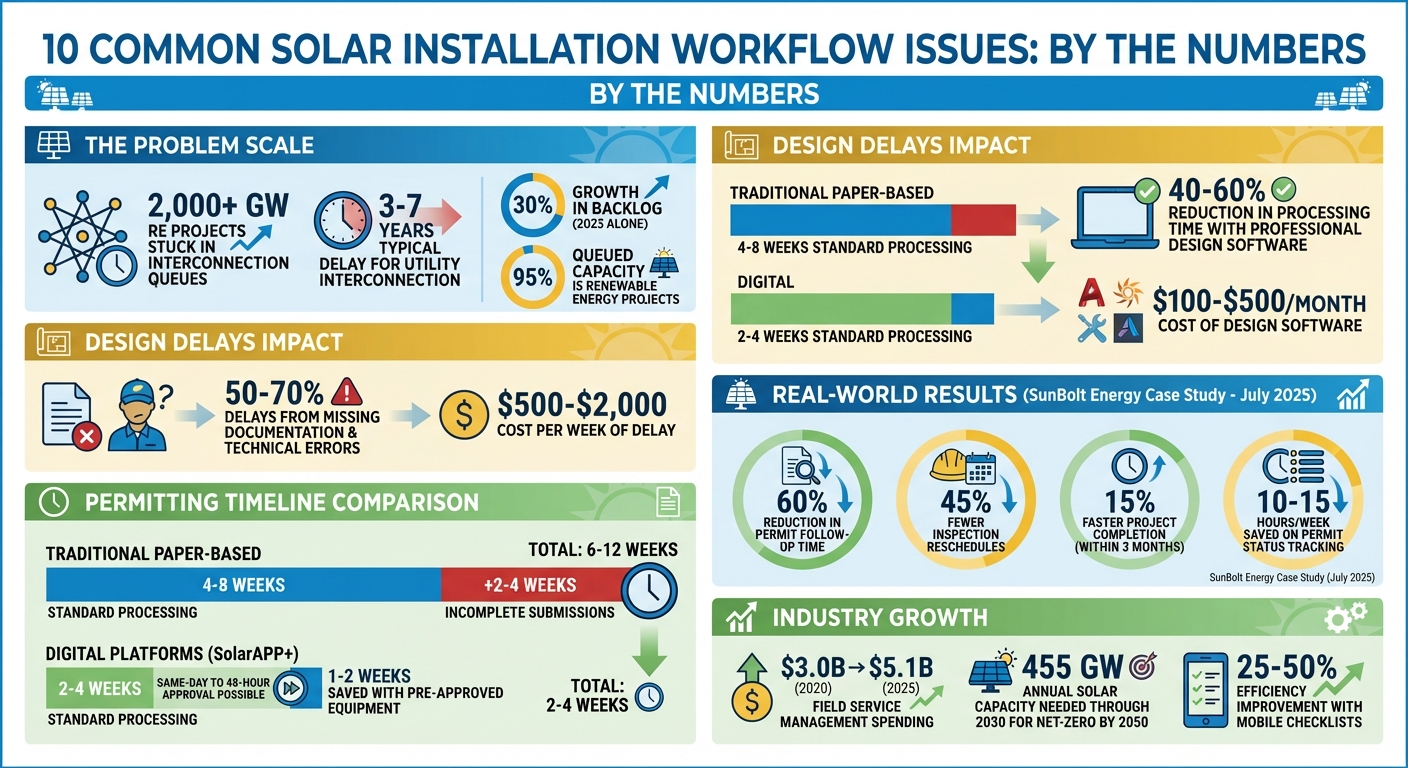
Solar Installation Workflow Issues: Key Statistics and Solutions
Common Workflow Issues in Solar Installations
1. Design Delays and Proposal Inconsistencies
A significant chunk of delays in solar installations – around 50% to 70% – comes from missing documentation and technical errors. These include mistakes in structural load calculations or flawed electrical schematics, which can derail both design and permitting timelines. The financial impact is no small matter, with each week of delay costing between $500 and $2,000 in overhead, storage fees, and lost opportunities.
To tackle this, using pre-submission checklists and professional design software like AutoCAD, HelioScope, or Aurora (costing $100 to $500 per month) can make a big difference. These tools help create permit-ready documentation and can cut processing times by 40% to 60%. Digital submission platforms also speed things up compared to traditional paper-based methods.
Another smart move is adopting jurisdiction-specific templates. These templates ensure compliance with local codes, including unique forms, code amendments, and setback requirements (typically 18 to 36 inches). By streamlining these processes, revisions are reduced, saving weeks of back-and-forth. In areas using automated platforms like SolarAPP+, approval timelines can shrink to same-day or 48-hour turnarounds. This level of standardization not only smooths out the design phase but also lays the groundwork for faster permitting.
2. Permitting and Compliance Bottlenecks
Traditional paper-based permitting can be painfully slow, taking 4 to 8 weeks – and that’s if everything goes smoothly. Missing or incomplete submissions can stretch this timeline by another 2 to 4 weeks. On the other hand, digital portals, like municipal e-permitting systems or SolarAPP+, offer real-time tracking and faster reviews, reducing the overall processing window to just 2 to 4 weeks.
Leveraging pre-approved equipment from local AHJ (Authority Having Jurisdiction) databases can shave off 1 to 2 weeks of technical review time. For more complex commercial projects, pre-submission meetings with AHJ officials are a proactive step. These meetings help identify potential issues early, avoiding last-minute roadblocks. While permitting efficiency is critical, the bigger challenge often lies in navigating utility interconnection delays.
3. Utility Interconnection Delays
The U.S. is currently grappling with a massive backlog of over 2,000 GW of renewable energy projects stuck in interconnection queues. These delays can stretch anywhere from three to seven years, worsened by outdated "first-come, first-served" models and costly re-studies. In 2023 alone, the backlog grew by 30%, with renewable energy projects making up 95% of the queued capacity. In regions like MISO (Midcontinent Independent System Operator), over 170 GW of solar, wind, and storage projects face delays of four years or more. Network upgrade costs, often reaching hundreds of millions of dollars, can even make some projects financially unfeasible.
"The interconnection backlog [is] the single greatest challenge facing the clean energy transition."
- Zero Emission Grid
Speculative projects, often referred to as "phantom megawatts", add to the congestion and skew capacity planning. Changes to project specifications during the process can trigger mandatory re-studies, further extending timelines. To address these issues, locking in specifications early and standardizing processes can improve readiness for grid reviews. Tools that provide queue intelligence can help identify less congested grid zones. Additionally, keeping site control and permitting records up-to-date ensures projects meet stricter readiness requirements.
sbb-itb-2560759
How Standardization and Integration Solve These Problems
Why Standardized Workflows Matter
When it comes to addressing workflow challenges in solar installations, standardization is a game-changer. It makes processes predictable, repeatable, and far less prone to error. By sticking to consistent procedures, companies can avoid costly mistakes, especially during compliance checks. Ajay Sahoo from CRMLeaf puts it plainly: "For every day an installation is stalled due to paperwork, labor costs pile up while revenue is delayed". Standard Operating Procedures (SOPs) can prevent common issues like double-booked appointments, missed inspections, and unnecessary rework, saving both time and money.
How Integrated Business Management Solutions Help
Integrated systems, like centralized ERP solutions, bring together all the moving parts – permit statuses, application numbers, and documents – into one unified hub . This approach eliminates data silos, ensuring smoother transitions from sales to installation and final payment.
Take Blu Banyan’s SolarSuccess ERP, for example. This system simplifies permit tracking and scheduling by linking permit and inspection statuses directly to master schedules. Project managers can then allocate resources based on real-time data. Features like color-coded status tags (e.g., "Permit Submitted" or "AHJ Approval Received"), automated alerts, and mobile access allow field crews to update statuses and upload photos instantly. This reduces back-office delays and speeds up documentation.
The growing demand for such tools is evident. Global spending on Field Service Management solutions is expected to grow from $3.0 billion in 2020 to about $5.1 billion by 2025. These tools are paving the way for more efficient operations, as the steps below illustrate.
Steps to Implement These Solutions
To make the most of these solutions, start by connecting your solar CRM with project management tools. Implement jurisdiction-specific automated workflows to streamline the process from lead capture to final payment. Use software that automates permit paperwork by pulling information from stored project data, cutting down on submission times and manual errors. Ensure all designs, permits, and utility agreements are stored in one central repository with version control, so teams always have access to the most up-to-date information.
Customer portals and automated notifications are another must-have. These tools can keep clients informed about project progress through SMS and email updates, reducing missed appointments and freeing up your team from constant status inquiries.
For instance, in July 2025, SunBolt Energy – operating across four U.S. states – adopted an integrated CRM+ERP system with automated workflows. Before, their team spent 10–15 hours weekly chasing permit statuses. The new system cut permit follow-up time by 60%, reduced inspection reschedules by 45%, and sped up project completion by 15% within just three months.
Lastly, equip your field teams with mobile tools to update statuses in real time. This allows technicians to instantly upload inspection results, eliminating delays caused by waiting until they return to the office. By embracing standardized workflows and integrated systems, solar companies can minimize errors and significantly improve project efficiency.
Conclusion
Improving Solar Installations with Better Workflows
Issues like design delays and manual data entry slow down solar projects and drive up costs. Streamlining workflows can eliminate redundant tasks. For instance, using mobile checklists to gather critical site data before technicians leave has been shown to improve efficiency by 25–50%. These processes not only simplify onboarding but also allow businesses to scale without adding administrative strain. Plus, digital audit trails ensure compliance is always documented.
The Future of Solar Workflow Solutions
With these operational improvements in place, the solar industry is ready for even bigger changes. To meet the goal of net-zero emissions by 2050, the world needs to add 455 GW of solar capacity annually through 2030. Achieving this requires moving away from scattered spreadsheets toward unified, cloud-based platforms that connect CRM, design, field operations, and accounting. The trend is clear – spending on Field Service Management solutions is expected to grow from $3.0 billion in 2020 to $5.1 billion by 2025.
Blu Banyan’s SolarSuccess ERP leads the way in this transformation. By centralizing project phases with tools like automated permit tracking, mobile updates, and real-time financial insights, it shows how standardization and integration can turn the industry’s growing demand into streamlined, high-performing operations.
FAQs
What causes most solar project delays?
Most delays in solar projects stem from planning and coordination hiccups. Common culprits include hold-ups in permitting, site assessments, and logistical hurdles like equipment delivery or scheduling conflicts. Without consistent processes, miscommunication and inefficiencies tend to creep in.
On top of that, environmental factors – like unexpected shading issues or unforeseen site conditions – can make matters worse. Establishing streamlined workflows and clear, standardized procedures can go a long way in tackling these challenges, ensuring better communication and smoother scheduling.
How can we cut permitting time with digital tools?
Using digital tools, such as automated permitting platforms, can dramatically shorten the time it takes to secure permits. Take SolarAPP+, for instance – it allows for instant permit approvals for residential PV projects that comply with code, reducing the process by an average of 13 business days.
Beyond that, digital permit management solutions help ensure applications align with the requirements of local Authorities Having Jurisdiction (AHJs). This not only speeds up reviews and approvals but also makes it easier to handle permits in unfamiliar jurisdictions. The result? Smoother workflows and fewer inspection failures.
How can we reduce utility interconnection delays?
To reduce delays in utility interconnection, prioritize pre-application due diligence by thoroughly researching requirements and ensuring all documentation is both accurate and complete. Establishing strong relationships with utility providers can also help speed up the approval process. Leveraging automation technology is another way to simplify workflows and decrease processing times. Additionally, considering hybrid projects and actively managing portfolio risks can be effective strategies to address backlogs and shorten interconnection timelines.
